In this informative blog post by S. B. Watson, learn all about the unique card game that helped inspire S. B. Watson’s latest story for AHMM, “Tricks on the Table,” from our July/August issue, on sale now!
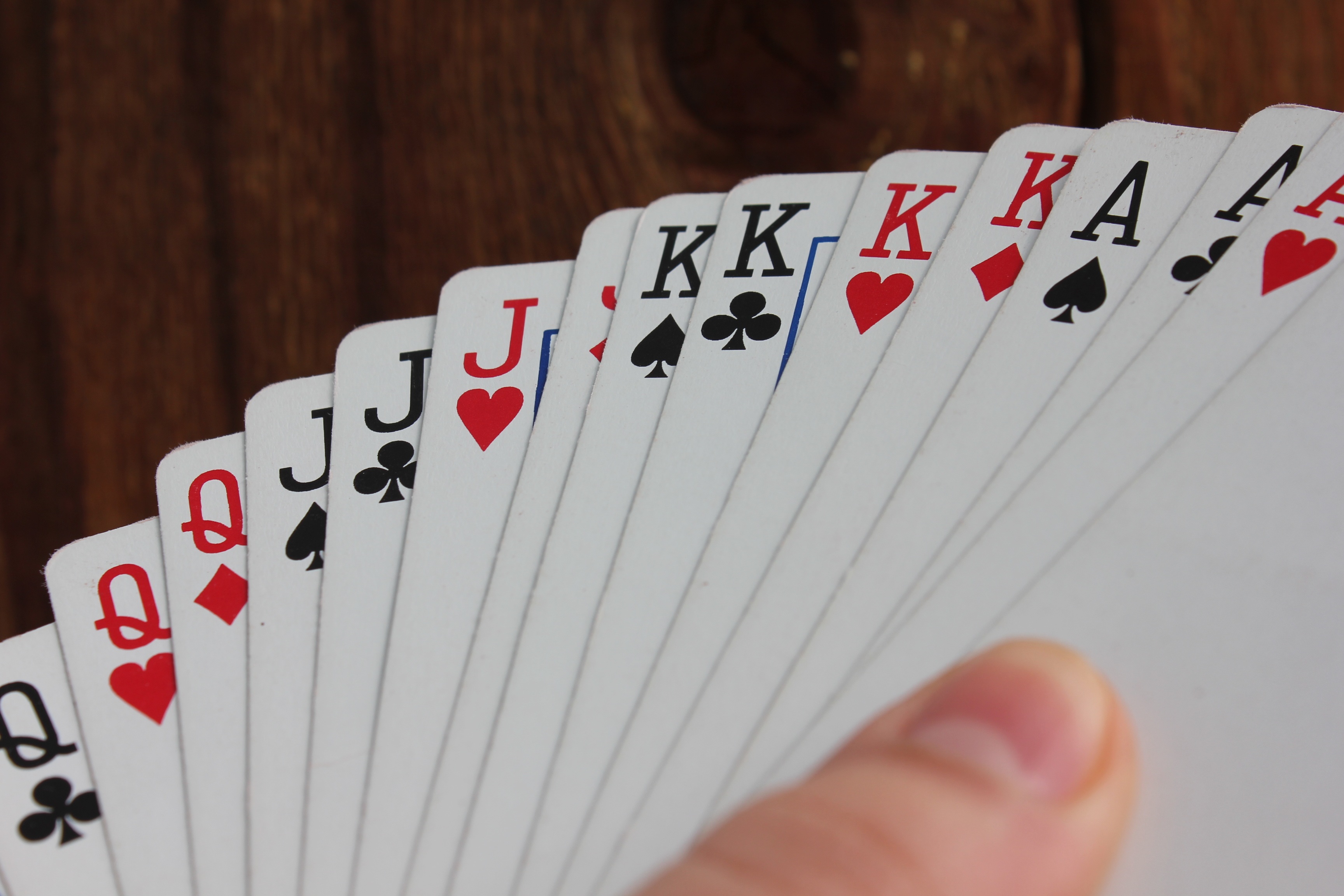
The subject of “Tricks on the Table” is obscure, out-of-date to the point of being archaic, irrelevant to today’s social movements, and very dear to my heart—whist.
In case you’re not familiar with the term, “whist” was a trick-taking card game that grew in popularity in England and France from the 1740s up to the late Victorian era. According to Cavendish—a name you’ll hear a lot, if you ever look into the history of Whist rules—the ‘modern’ form of whist began in parlors during the 1740’s, when Edmond Hoyle (yes, that Hoyle) began teaching the game and its strategies by private lesson.
By the mid-1800’s, the game had experienced an explosion in popularity. It was played by everyone from the King of France to inveterate gamblers, one step away from debtor’s prison. For a time, it easily rivaled chess for regard and popularity. By the end of the 19th century, however, it fell by the wayside as other games—such as Bridge—superseded it.
Today, it’s nearly forgotten, lingering only among hardcore fans of the five-hour Pride and Prejudice miniseries and maybe a few readers of Jules Verne (whist was Phileas Fogg’s favorite diversion).
Which brings this back round to myself.
Shortly after Jenet and I were married, two of our closest friends—Gillian and Timothy—also got hitched. All four of us were reading nerds. We’d all read Pride and Prejudice, I’d read Around the World in Eighty Days. We all loved boardgames. Trying our hands at Whist seemed like a fun one-off experiment.
That one-off game night turned into weekly whist games that ran for nearly four years. When Life eventually imposed itself—in the form of kids, work, projects, conflicting schedules, competing pastimes—the weekly game nights turned into monthly game nights. These monthly get-togethers continued, again, for years.
It’s been a decade-and-a-half, and we still get together with Gillian and Timothy to play whist. Now we’re down to every few months, and when we play, we’re surrounded by a dozen rowdy kids—but it’s still our go-to game.
I can’t say we’ve learned any great secrets of life from it—except that luck absolutely does exist; ‘sure-thing’ schemes always find a way of unravelling themselves; no cause is too lost to have hope; teamwork doesn’t always beat individual inspiration, but is usually more fun; and that our wives somehow win way more than Timothy and I, no matter how much we calculate. There’s just something about it that keeps us coming back.
It was after one of these monthly whist nights, while my wife and I were talking over the play of the hands, that the idea for an ‘impossible’ game struck me as the core for a mystery. I mulled the concept over for a year before I developed what I thought was a plausible method for writing the idea out.
The story that resulted is a gentle tour through the history of whist—its most famous practitioners, the greatest whist writers, and even the laws and philosophies of play. Fact, myth, and my own experiences are all on display in “Tricks on the Table”—identifying each is probably best left to the reader.
So, to end, is “Tricks on the Table” relevant to today? Does it dig into the depths of the human condition? Does it make a good argument to excuse its own obscurity? Probably not. But, mirroring my own relationship to the game of whist throughout the years, I hope reading it will simply be darn fun, and keep you turning the pages to see the next lay of the hands. No more, no less.