It began, appropriately, in Los Angeles, in the 1950s, guided by the HOLLYWOOD sign up on Mount Lee. Showtime! So, before preachers like Joel Olsteen and Pat Robertson there were Fred Schwartz and Billy James Hargis, the real-life models of my assassinated, anti-communist crusader Dr. Timothy St. John Mahoney.
I was born under that big white sign in Hollywood Presbyterian Hospital as WWII was ending. One of my earliest memories is walking a few blocks to Beverly Blvd. in the evenings with my father. We stood in front of the appliance store watching the televisions glowing against the dark. We moved to the San Fernando Valley, bought that first black and white television, and watched “The Ed Sullivan Show”.
Their script hasn’t changed much over the years. Then the bad guys were the communists and the bad Negroes like Martin Luther King. Now the bad guys are progressives, Black Lives Matter, Alvin Bragg, and, interestingly enough, still the communists. The stage directions haven’t changed either. Mock them, hug flag, thump Bible, waive arms, bright lights, patriotic songs. It is mesmerizing. It draws you in as it drew in my fictional Beth. You can hate them because they’re not us. God didn’t create the Other, they are the spawn of Satan.
When I was in high school, my girlfriend and I attended one of Fred Schwartz’s Southern California School of Anti-Communism meetings in the Los Angeles Memorial Sports Arena. It wasn’t quite as dramatic as my fictional Reverend Mahoney rising up through the stage, but close. Schwartz invented the televised anti-communist crusade. He talked the then independent, now Fox affiliate, KTLA into doing a remote. He began with “The Star-Spangled Banner” and prayers. Communists don’t pray, we do. And tithing, yes. Oh, yes. Lots of tithing. Love Jesus and pass the basket.
It is for that reason that Joel Olsteen doesn’t fly coach.
Billy James Hargis, who attended a series of rural Bible colleges, jumped onto the Schwartz bandwagon. I don’t think he was the first anti-Communists, pro-segregation televangelist to be accused of abusing the young who fell under his spell. He may have been the first to be publicly accused of doing it with both girls and, shudder to think it, boys.
The draught that hit California five years ago triggered, pun intended, the idea of the police finding a rifle in the exposed bottom of a reservoir. Was it the gun that killed Mahoney? I could, if only in a story, make a fictional Schwartz or Hargis pay for their many sins.
Write what you know, the oldest admonition to the writer. But in my case Beth, who attends the rally with my unnamed protagonist, is the antithesis of my date who attended that Southern California School of Anti-Communism meeting with me in 1961. She is my wife, the Stanford educated, New York trained lawyer. Beautiful like Beth, but not Beth.
The truest, if truth is subject to degrees, thing in “Roses for Beth” is the post-rally trip to C.C. Brown’s for a dark chocolate sundae. The Beach Boys got right almost everything about that California era, the T-Bird and surfing, the Little Deuce Coupe. But I’ll never know why they didn’t cover the C.C. Brown’s sundae. It was, as my unnamed protagonist explains, proof positive to the young Californian that there is a God. There should have been a song in that.
I can still picture it. A ghostly green face staring through a pair of gold-rimmed pince-nez. Above it in black letters is the question: Whose Body? The memory takes me back to being twelve, standing in my school bookshop, unable to look away. I bought the Dorothy L. Sayers’ novel, and my love of crime fiction began. In the intervening decades, not only have I read crime fiction, but I’ve enjoyed listening to interviews with authors, and been fortunate enough to attend a couple of crime writing festivals. One question that’s invariably asked is where the inspiration for a story comes from. The answers are as varied as an inscription on a Victorian gravestone, to something pulled from a recent news headline. Perhaps, because I trained as a photographer, and spent my career analysing images, I often find at least part of my inspiration comes from a visual source.
When I began thinking about my story that became “The Fall,” I knew I wanted to use an idea I’d had for several years. It was based on a newspaper article about a high-end mugging and, while in reality the victim was innocent, I could see a way in which the situation might not be quite so straight forward. My problem was I couldn’t find a context in which to set the story. It was winter, and I was flicking through a calendar I’d bought in readiness for the new year, when I saw an image that almost immediately inspired the framework for the story. The calendar was a National Trust one, and the photograph was the view across the Parterre gardens at Cliveden House, Berkshire. Cliveden is built high on a ridge, and in the picture you can see the light catching the River Thames as it winds its way through the trees below. The grounds are open to the public, and I’ve spent many happy times walking here, and along the section of riverbank beside the estate. I knew I’d found my location.
Once I’d settled on the location, I looked at other images of Cliveden, including photographs I’d taken when visiting, and found myself drawn into its colourful past. I already knew some of the stories connected to the house, but I was interested to know more. Although currently a respected, five-star hotel, looked after by the National Trust, (Meghan Markle spent the night before her wedding to Prince Harry here) Cliveden’s history reveals times when something darker was going on beneath its glossy surface. The current, opulent Italianate house was built in 1851, but two earlier properties on the site were destroyed by fire. The original house was commissioned by the 2nd Duke of Buckingham as a gift for his mistress. He later fought a duel with her husband, who subsequently died from the injuries he sustained. But it’s perhaps an event from comparatively recent history that’s defined the house. In the summer of 1961, married politician, John Profumo, met Christine Keeler in Cliveden’s outdoor pool. He was the Secretary of State for War. She was the teenage mistress of an alleged Russian spy. They began an affair, and lied to cover it up. When the relationship became public it led to resignations, national security concerns, a media frenzy, a suicide, court trials and a prison sentence. It was also a contributing factor in the downfall of the government Profumo had been a part of. The British Politician Sex, as referenced in Billy Joel’s lyrics to “We Didn’t Start The Fire,” remains one of the biggest scandals in British political history.
Cliveden’s past isn’t all dark though. Throughout its history, the various houses on the site have been owned or rented by dukes, earls and princes, but perhaps Cliveden’s most glamorous era came in the early twentieth century, during the tenure of William and Nancy Astor. William gave Nancy a tiara containing the fifty-five carat Sancy diamond, currently in the Louvre in Paris, and John Singer Sargent painted her portrait. They turned Cliveden into a weekend party house on a grand scale, with guest lists ranging from George Bernard Shaw to Charlie Chaplin, and Winston Churchill to Franklin D. Roosevelt. The exposure helped American-born Nancy become the first female seated member of the British parliament.
Although Cliveden is far too grand a property for my protagonists, its mixture of intrigue, scandal and decadence were all elements I wanted to include in my story, albeit on a smaller scale. Gradually, the idea of a couple living their perfect life in a beautiful house began to form. While I didn’t envision Miles and Nina as a down-market version of William and Nancy, I did see them as outwardly successful. I imagined their dreams, although shared, to have come between them. I was interested in exploring what would happen if it looked like this lifestyle was ending. For the idea to work, the stakes had to be high and, while there are many ordinary houses close to Cliveden, there are also some spectacular riverside properties with gardens stretching down to the water. I felt one of these could incite the behaviour the plot required, particularly if it was about to be lost.
I can trace my thought process that ended in the idea of a luxury house, where things weren’t all as they appeared, back to seeing the calendar photograph of Cliveden. It’s not the first time an image has inspired my writing either, but it’s not always one as spectacular as this. I was fortunate enough to have a story published in the September/October 2020 issue of Alfred Hitchcock’s Mystery Magazine. It’s called “Fruiting Bodies.” I came across the phrase I used for the title while looking at pictures of fungi, and trying to determine which species was invading my lawn.
There were two main influences for “Alibi in Ice.” The first is obvious—I wanted to pay homage to Nero Wolfe and Archie Goodwin, which meant that my main sleuth, rock-star-turned-private-eye Martin Wade, had to be stuck inside (in his case, with the flu) while his assistant, Valerie Jacks, did the work in the outside world and brought it back to him helped solve the case.
Valerie is new to the series, which has run in Ellery Queen’s Mystery Magazine,Tough and the Anthony-nominated Lawyers, Guns & Money anthology* since 2020, and was first introduced in the story “Wait for the Blackout” (EQMM May/June 2023). But because she is a POV character in Negative Girl, the first Wade & Jacks novel (forthcoming from Datura in September), I wanted readers to get a sense of her voice and what she brings to the agency – namely a deep knowledge of her hometown’s lore and mysteries and a pair of boxing-trained fists.
The second influence comes from the Cherry Poppin’ Daddies.
Though they’re best known to most people for their 1997 hit “Zoot Suit Riot,” the Daddies have been putting out swing, ska, punk and funk records since 1990s Ferociously Stoned. Though they became the whipping boys for the swing revival backlash, the band, fronted by Steve Perry, has continued to put out music, with their latest album From the Pink Rat, released July 26th.
The band is deeply underrated and has been a huge influence on me since I first heard Zoot Suit Riot. My earliest crime stories were set to noir-ish tunes like “Brown Derby Jump,” and I was a frequent fixture at swing nights in the early 2000s. Even my clothes still honor this tradition; I’m easy to spot at a convention because of my victory rolls, crinolines and Vampire-heels.
Given that my first novel, The Big Rewind, revolved around a mix tape, and the protagonist of the Wade & Jacks series is a former rock star, it should be no surprise that music is one again a major influence on my work. In this case, the song is “The Lifeboat Mutiny,” from Ferociously Stoned, which tells the story of a girl who feels crushed by the pressures of her life, of feminine beauty, shallow friendships and self-esteem, simultaneously embracing and rejecting those expectations. She is both the betrayed and the betrayer, evidenced by the “Death mask of Judas” and identification as “the mutineer” inside the lifeboat alongside her vapid friends.
Perry, now a resident of Eugene, Oregon, also hails from the Binghamton area, where I went to college and subsequently discovered crime fiction. I find that the Daddies’ music—especially songs like “Grand Mal,” “Cosa Nostra,” “Concrete Man Blues,” and “Kids on the Street” convey an intrinsic understanding, a bloodline, even, of the scrappy, working class struggle that underpins the area, even today.
A second Daddies-influenced story, “Dr. Bones,” (also from a Ferociously Stoned track) is forthcoming in Ellery Queen’s Mystery Magazine. And I doubt it will be the last time this band has a place in Martin & Valerie’s world—they’ve been there since the beginning, and aren’t going anywhere soon.
*My story, “Charlie’s Medicine,” a Martin Wade prequel of sorts, took home the 2023 Shamus Award for Best Short Story.
Despite coming from the heart of the UK, Country music, especially of the 1960s and early 1970s, has long been a love of mine, and when it came to writing a story of obsession and revenge, the world of Country—one of whose foundational texts is “I shot a man in Reno just to watch him die”—seemed a natural fit.
As well as focusing on the revenge aspect, I also knew that I wanted the story to be about how men construct images of women—literally in terms of crafting a stage image and persona, or figuratively in terms of how they may build up an image of who they think a woman might be, without actually bothering to involve her in the process. Country often deals in first-person perspectives of heartbreaks, but those first-person perspectives also allow for a certain amount of bias, obfuscation and unreliability (does Jolene even know that the narrator of her song exists, or is it all just a manifestation of the narrator’s fears and insecurities?), and so I wanted to tell my story from the POV of someone whose feelings and actions we can understand and empathize with—right up until we can’t.
As well as there being an inherent idea of authenticity to Country music—the idea that the artist has “lived” their songs—there is also a concomitant idea of artificiality, the desire to create a “show” persona, part of which involves a costume, so I wanted to make my protagonist someone involved in that process. Years ago, while working as part of a film shoot in the South of the US, I’d visited the Country Music Hall Of Fame in Nashville and seen the exhibits there, many of which contained examples of heavily rhinestoned stage costumes, and the likes of Gram Parsons’ marijuana-leaf-embroidered “Nudie” suit, so that felt like a natural fit. I loved the idea of somehow making embroidery dangerous.
The story spans three decades and two different countries, jumping in time to catch the characters a little older and a little more changed,, a structure which hopefully gives the reader a sense of the scale of the protagonist’s dedication to revenge, as well as giving the idea of the arc of a career—from small beginnings to heights of fame and back out the other side. It’s full of the big feelings you find in Country music—heartbreak, longing, regret—paired with some of the drivers of crime fiction—resentment, jealousy, desire—to hopefully create something that feels true to both genres.
Steven Sheil (X: @ssheil) is a writer and filmmaker from Nottingham, UK. His work has previously been published in Black Static and The Ghastling, online at Fudoki, Horla, Punk Noir Magazine and Pyre, and as part of the Black Library anthologies Invocations, The Harrowed Paths and The Accursed. He is also the writer and director of the feature film Mum & Dad (2008), the co-director of Mayhem Film Festival, and an enthusiastic collector and reader of vintage crime fiction.
There’s a fascinating mechanism hardwired into our human behavior that engages interest, boosts retention, and provides a satisfying sense of closure in many a life situation. I’ll call this phenomenon The Rule of Three and apply it, for our purposes, to writing and telling a story.
I use the term “rule” loosely since there are few, if any, rock-hard rules to writing and the three that once existed are lost to history, as pointed out by Somerset Maugham. There is, however, a trove of time-honored traditions so ingrained in our culture and consciousness that calling upon them invokes power while ignoring them may constitute a missed opportunity.
Or worse.
So let us embark on an exploration of The Rule of Three, that we may discover, examine, and enjoy this intriguing device. (see what I did there?)
Consider: do things really happen in threes? Or does it just seem that way because the convention is so firmly embedded in our cultural expectations? It’s everywhere.
Life, liberty, and the pursuit of happiness.
Blood, sweat, and tears.
Sex, drugs, and rock ‘n’ roll.
Comedy writers understand the inherent power of Three and know how to wield it with impeccable timing. Here’s Dave Barry serving it up:
“I should be a happy man. I have all the elements of a good life: a loving family, a nice home, a dog that doesn’t pee indoors without a good reason.”
Here’s another example with a mystery/crime twist from Laura Kightlinger:
“I can’t think of anything worse after a night of drinking than waking up next to someone and not being able to remember their name, or how you met, or why they’re dead.”
And one more, from The Dick Van Dyke show—a waitress serving a bald man:
“Can I get you anything? Cup of coffee? Doughnut? Toupee?”
I challenge you to find a political speech of more than three minutes that isn’t rife with examples. Take this, from Benjamin Disraeli:
“There are three kinds of lies—lies, damned lies, and statistics.”
Or this sage advice for speakers, from Franklin Roosevelt:
“Be sincere. Be brief. Be seated.”
And harking back to my high school humanities class, a literary instance from Shakespeare’s Julius Caesar:
“Friends, Romans, Countrymen. Lend me your ears.”
And since we’re on the subject of literature and entertainment, how about Goldilocks and The Three Bears, The Three Musketeers, or The Good, the Bad, and the Ugly.
I remember watching a Sesame Street sketch as a child, with a catchy tune by The Talking Heads that still plays in my mind. It’s about a cartoon creature named Seymour caught up in a story that has a beginning, middle, and an end.
In writing, we often use the three-act structure. We employ three try-fail cycles in a buildup to the climactic scene.
We can use The Rule of Three to establish a pattern and then break it to instill a sense of unease or outright surprise in the stories we tell.
We can use it to direct reader attention, emphasizing what we want them to remember by keeping it within the three-part structure. Or—a nifty tool for those of us who write mysteries—we can use it to hide in plain sight what we want our readers to forget.
Thus, we can play fair, providing that vital clue, but burying it in the fourth position out of a list of five. People tend to remember the first, second, and last items in a list, so a catalog of just three items sticks in the memory, while a longer list leaves a lot of scope for hiding information.
And think of the potential for deepening character dynamics. With just two characters, A interacts with B and B interacts with A. But when you add a third character, possibilities for conflict sprout like dandelions after a spring rain.
Writers through the ages have used the power of Three to create memorable and compelling stories. There’s the triangle of Elizabeth Bennett, Mr. Darcy, and George Wickham in Pride and Prejudice. Rick, Ilsa, and Laszlo in Casablanca.
And what if the writers of the movie Ghost had left out Oda Mae? Instead, they created a gap between Sam and Molly that only Oda Mae could fill, adding the dimension and conflict that makes the film so enjoyable to watch.
And much of what we experience as a result of The Rule of Three—both on the part of the reader and the writer—occurs on a subconscious level, making it all the more powerful.
I bring all of this up because The Rule of Three is what prompted me to write my story, “Delivering the Egg MacGuffin,” which I’m delighted to see appearing in the July/August 2024 issue of AHMM.
I took a writing workshop based on exploring The Rule of Three in storytelling. The assignment at the end of the class was to write a story using what we learned. I leave it to you to read my Egg MacGuffin story and discover what I did with The Rule of Three, but I want to tell you about one very obvious way I used the device because it involves a subject I find fascinating—perspective.
A story should be told from the perspective, or Point of View, of the character best positioned to communicate that story to readers. But this doesn’t look the same for every story.
One story may feature a single POV character relating the entirety of the tale, while another story may be told by multiple characters through their own points of view. Add to this another dimension—when I am reading or writing a story, I am keenly aware that other characters, besides the one “speaking,” have their own lives, their own stories, viewed through their own prisms.
And sometimes, those stories must be told.
In “Delivering the Egg MacGuffin,” I give readers the story of a single event from three different viewpoints, each one peeling back a few layers to reveal more about what actually happened.
I’m intrigued by the concept of differing perspectives, as in the movie Rashomon, where Kurosawa uses the technique to reveal the complexities of human nature. Four people give their account of the same incident—a murder—and each is accurate in its way and yet quite different.
I used the same sort of idea when I wrote my first two novels. In Nocturne in Ashes, my main character, Riley Forte, is trapped in an isolated community with a killer after the catastrophic eruption of Mt. Rainier. She teams up with a cop, but their distress call is cut short when cell towers and radio communications fail. Three days pass before help arrives.
In my original plans for the book, the sheriff’s deputies who respond to their call had their own point of view chapters, but there was so much to tell in this five-hundred-page thriller that I had to cut their subplot from the final version.
However, Chief Deputy Randall Steadman and his partner, Frost, screamed to have their story told. That’s when I created their paraquel—not a prequel or sequel, but a story happening alongside another story, touching briefly at a few points and centered on the same major event, but distinct and thrilling in its own right.
That’s how Steadman’s Blind was born.
It may be true that there’s nothing new under the sun and every story has already been told. Perhaps all we can offer, as writers and storytellers, is our own voice, imagination, and perspectives as we craft our stories the best way we know how, using techniques like The Rule of Three to engage, entertain, and thrill our readers.
That’s the truth, the whole truth, and nothing but the truth.
I’m one of those readers who scans the first paragraph of a book and puts it down if it doesn’t rope me in. If I’m feeling ornery, I’ll give the author only one line to snag me. So, as a writer, I make a point of trying to opening stories with a pop to avoid losing those readers who are as unreasonably quick to judge as I.
I’m not a fan of setting the scene before diving into a story. Why should my readers be interested in what a character feels or how a setting looks unless they’re already invested in that character or wonder about that setting. As Elmore Leonard—who knew a thing or two about writing—famously advised, “Never open a book with weather.”
Perhaps cozy, romance or “literary” readers have more patience than noir or hard-boiled fans, but my readers want to be hurled, limbs flailing, into the story.
That doesn’t mean that you have to start with something like, “His face hit the pavement hard,” as one of my story begins. You can be gentle if you start with a twist. The unexpected can stand in for the shocker.
Here’s the opening to my story, Honeymoon Sweet:
“For a sweet house, right on Santa Monica Beach, it was unbelievably easy to break into. Mickey found a window he could open with a putty knife, so the double-locked doors were a joke. And Lana disabled the alarm within the forty-five-second grace period before it would have triggered. They were in and no one knew. What a great way to kick off the honeymoon.”
Did it grab your attention? A twisted open implies, right up front, that more surprises are in store. I like that in a story. Sue Grafton used the device to launch an empire. Here’s how she opened A is for Alibi: “My name is Kinsey Milhone. I’m a private investigator, licensed by the state of California. I’m thirty-two years old, twice divorced, no kids. The day before yesterday I killed someone and the fact weighs heavily on my mind.”
She lulls you with a straightforward description of a divorcee detective, then smacks you awake with the unexpected.
Another opening tactic is the suggestive hook. In the first paragraph of my first novel Go Down Hard I use an image:
“I look through the spyhole. Gloria has a bottle of gin in her hand and a pair of cuffs hanging from her belt loop. A deadly combination.”
It’s a soft open for a noir thriller, but doesn’t Gloria pique your interest?
Michael Connelly opened The Poet with a suggestive concept: “Death is my beat. I make my living from it.”
How can you put that book down before you’ve satisfied your curiosity about the narrator? Make readers wonder and you’ve got them hooked.
These are just two of a multitude of possible opening tactics, but I hope you got the idea. Bottom line: hit ’em fast and hard and where they least expect it.
The very first short story I sold to Dell Magazines, was “Pigskill”, published in 1993 by Ellery Queen Mystery Magazine. I owed the germ of the plot to a couple of paragraphs in The Telegraph. My husband, an international soccer specialist, had a subscription, because back in the pre-internet days, the London paper provided updates on European “football” and, more importantly to me, excellent crime coverage.
One piece that caught my eye was the tale of an Avon Lady, in those days a door to door traveling saleswoman, who had been murdered on her rounds and disposed of via the denizens of a local pig farm. This item lodged in my mind. Eventually, after a fair bit of time and an uncomfortable call to a swine specialist at the Connecticut Agricultural division, it became a story about an impulsive vacation romance that ended badly all round.
My most recent story for Alfred Hitchcock Mystery Magazine, “Up and Gone,” had a similar genesis, this time from a much more recent story in The New York Times about a wife and mother who had vanished in the 1970’s, seemingly without a trace. Her husband told the children she had simply left, and although he was himself a policeman, he never reported her missing.
A skeptical reader may think fortunate that he died before modern DNA matched a long unidentified corpse with family DNA. But the children insisted that their father was a good man, a careful father, all in all a good citizen. Unlike the genesis of “Pigskill,” this sad story struck me as one about consequences and aftermath and uncertainty, and the crucial part of the story was the impact of their ambiguous inheritance on the children. This was a novel in embryo, not a short story, and I am retired from novel writing.
However, one little detail stayed with me: the fact the husband did not report his wife missing and, beyond telling the children she was gone, never explained, never speculated—a striking passivity, especially in a cop. I wondered about that attitude, and eventually Grant and Evelyn arrived, an unhappily married suburban couple, both dissatisfied, both open to a change in circumstances, and neither one a particularly moral character.
This, in fact, is how most of my stories and novels have been conceived: something, often in the press or otherwise in print or on TV, presents an idea. After a while, sometimes a few weeks, sometimes several years, the idea appears in a different context and develops into a story.
For, although my excellent early editor Ellen Joseph quite liked stories “ripped from the headlines,” a direct borrowing of the narrative line has never worked for me. If I know the whole plot from start to finish, I cannot make myself write it out. For me, the pleasure of composing both novels and stories is the elemental pleasure of learning what happens next.
So it was with “Up and Gone,” where a disappearance opens the possibility of happiness, and where societal disapproval turns out to have a dangerous upside.
I read all kinds of fiction—fantasy, crime, suspense, thriller, science fiction—but they all have to have one thing, or I won’t finish the book: strong characters.
The story can have a fascinating plot, with amazing twists and turns, but if it doesn’t have characters I care about, I’m gone. Think Atticus Finch, Armand Gamache, Severus Snape, Scarlett O’Hara. However you feel about them, they are unforgettable.
But how do these great characters spring forth from the minds of writers? From their fertile imagination, of course, but also from real life.
These writers, like me, steal from people.
Little things, like an interesting turn of phrase, or a clumsy gait, or the way eyes shift away in disapproval.
A bit like Frankenstein building his monster, we add a little of this, take away a little of that.
But sometimes, sometimes we meet someone whose very presence twangs a response in us.
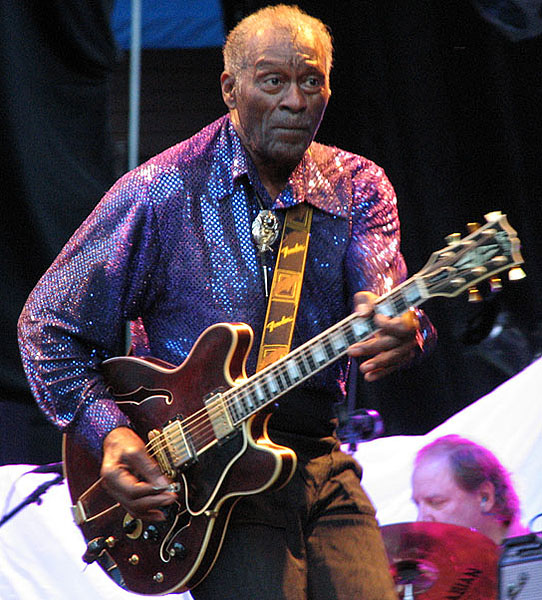
This is what happened with Estelle Martin, the main character in “Chuck Berry is Missing.” Estelle (better known as Stella) emerged from my subconscious fully formed and inspired by a woman I once worked for. Let’s call her Harriet.
Harriet was my boss in a big organization that will remain nameless. I should mention here that this nameless organization was blessed with a number of strong, smart, and quirky women leaders, but Harriet strode into our lives like a ship plowing through stormy waters: sure, steady and powerful. She towered physically over most of us even though she always wore flats. She couldn’t care less about being fashionable. She was fierce, capable and not afraid of hard work. She was invariably kind and patient, but did not suffer fools gladly or people who wasted her time.
And one day, she popped into my head when I started writing a story about a retired RCMP officer and the adventures that fell into her lap. So Harriet became the kernel for Stella Martin, former chief superintendent of Royal Canadian Mounted Police “M” Division in Whitehorse, Yukon.
While Stella retained some of Harriet’s best attributes, I gave her a waspish tongue and made her older, more impatient, and a little antisocial. I also made her disconcertingly honest and ferociously loyal, with an abiding thirst for justice.
She’s not easy to befriend, but certainly worth getting to know. At least, I think so.
The first Stella story, “The Mittens,” appeared in the Jan/Feb 2023 issue of AHMM. “Chuck Berry is Missing” is in the July/Aug 2024 issue.
Sometimes I have no idea where I get the idea for a short story but I can tell you exactly what inspired “Professor Pie is Going to Die” in the May/June issue of AHMM. It was “Mr. Jolly Gets His Jollies,” by Tim Baker, which appeared in the January/February issue three years earlier.
Do I hear you mumbling the word “plagiarism?” Shame on you for such skepticism. While Baker’s story was terrific I didn’t touch his plot at all.
No, what connected for me was the name of one of the characters, J.P. Corguts, and the illustration by Kelly Denato, which included a clown. Together they made me think of J.P. Patches.
If you grew up in the Seattle area during a certain era it is likely that The J.P. Patches Show was your favorite TV program. From 1958 to 1981 Chris Wedes, in clown makeup, played “the Mayor of the Town Dump.” Along with Bob Newman who played his girlfriend Gertrude they entertained a generation of kids and after the show went off the air they continued to perform at charity events and children’s hospitals. They were so beloved that there is even a statue of them in Fremont, Seattle’s most eccentric neighborhood.
I grew up in New Jersey so I had never heard of Patches until I moved to Washington and he was off the air by then, but I was raised on similar shows from New York (Sandy Becker, Sonny Fox, Soupy Sales, etc.)
But once Tim Baker’s story made me remember Patches it got me thinking: I couldn’t recall any mystery stories about local children’s show hosts. I decided to write about an actor who played one such beloved character.
You can find on the Internet a list of thousands of local TV kids shows from around the nation and the hosts of many of them had titles of respect: Officer Joe, Miss Becky, and so on. I got halfway through the list before I got tired of writing them down: Admiral, Commodore, Skipper, Captain, Sergeant, Sheriff, Deputy, Marshal, Ranger, Mother, and Grandpa, plus enough Uncles and Aunts to crowd a family reunion.
So my character became Professor Pie. Many years after the show leaves the air the actor who played him returns to the city of his fame for a nostalgia fair, only to discover that someone very much doesn’t want him there.
I hope Patches and Gertrude never faced such danger.
Computer Science pioneer and U.S. Navy Rear Admiral Grace Hopper said, “A ship in port is safe, but that’s not what ships are built for.”
There are a lot of ships leaving port these days. People are quitting, leaving the safety of their jobs, in record numbers. There’s even a name for the phenomenon. In the midst of the pandemic, back in 2021, Texas A&M University professor Anthony Klotz first coined the phrase the Great Resignation.
The field of education is no exception to this new mass exodus. Teachers seem to be retiring, moving to new territory, and changing professions in record numbers. It’s not hard to find a disgruntled teacher. The demands of the job are all-consuming. A college professor of mine once told our class of budding teachers that if we were doing the job the way it needed to be done, we would barely be able to squeeze in three meals a day. He might have been exaggerating some, but not by much.
Most likely there are a lot more disgruntled employees of all types out there who would opt to jump on the quitting bandwagon and get the hell out of Dodge if they weren’t so practical and such sticklers for minor details in life, like paying their bills and feeding their families. And so they remain. Fear of an unknown future keeps them in their safe port.
Readers in general, and mystery readers in particular, often ask writers about where their ideas for stories come from. My answer to that is often “What if?’
I wrote the story Murder, With Resignation in the summer of 2020, well before the term Great Resignation went viral. But the idea for the story goes back even farther, to one of the times when I confess to playing the role of disgruntled teacher myself.
About twenty-some years ago, towards the end of one particularly frustrating school year in public education, I made it be known to a number of my colleagues that I wouldn’t be returning the next year. At the time, I hadn’t yet found another job. Some of them likely thought I was just venting. That I’d be right back there with the rest of them in late August, wolfing down doughnuts and fruit at the breakfast buffet on the teachers’ opening day.
In midsummer I found another job. I dutifully resigned my position with the county school system, turning in my letter of resignation, and signing the required paperwork in person.
My wife was still a teacher with that same school system. With my new job I had the day off when she was set to go back to work for the opening day countywide meeting. I joked that it would be funny if I tagged along and enjoyed the pre-meeting refreshments. We had a good laugh about it. Wondering how long it would take for someone in authority to confront me for being there without reason. Believe me, I’d be the last person to actually do such a thing.
But my little joke got me thinking about an idea for a story. What if a teacher who’d shot off his mouth about quitting was out of touch with everyone over the summer. And all indications were that he’d moved on. And what if someone with ulterior motives sent a letter of resignation for him, setting up an instant conflict on the day of his return.
I made notes on the inspiration and filed them away with all the other ideas for stories I’d been stockpiling over the years, waiting to find the time to get around to the business of writing them. Over the years, I did get around to finishing some stories. But a lot of my ideas had to wait until I retired. Now, after finishing up a forty-year career of teaching high school mathematics, I’ve been fortunate to be able to pursue my interest in writing.
The idea for the characters of Pete Barrow and Sheriff Oscar Murphy goes back even farther than the origin of the story idea for Murder, With Resignation. I’d started writing fiction in my senior year of college, back in Pennsylvania, at Lock Haven State, under the tutelage of Professor Joe Nicholson. In the early 1980s I signed up for a class on writing short stories at Virginia Commonwealth University, in Richmond. I enjoyed the class at VCU and wanted more. So I followed up by enrolling in another class at VCU on writing a novel. The class was taught by a great guy named Robert Hilldrup.
Beginning writers are often advised to “write what you know.” So for my mystery novel, I created the character of Pete Barrow, a high school math teacher who moonlights as a private investigator. The character of African American Sheriff Oscar Murphy followed.
Bob Hilldrup gave me a lot of praise and encouragement. The novel was off to good start, but life got in the way. We moved to another state for new teaching positions and had our first child. Teaching and family took up most of my time. I kept working on the book when I could, mostly in the summers. It took me more than ten years to finish it. But when it was done, I wasn’t satisfied with it. I put it in the proverbial box under the bed and let it rest. When I wrote again, I worked on my short fiction.
But I never gave up on those characters. And when it came time to resurrect them for the short story, Murder, With Resignation, I wanted to rethink the characters as present day, older, wiser, and experienced people, not the young people I’d created in the time of my own youth.
Murder, With Resignation is the first in a series stories I’ve written with these characters. I envision a novel or two in Pete Barrow’s future. Thanks to editor Linda Landrigan and all the folks at Alfred Hitchcock’s Mystery Magazine, Pete Barrow finally makes his debut in the annals of P.I. fiction.
My advice to younger writers would tend to be of the ‘do as I say, not as I’ve done’ variety. Something teachers are not supposed to say! Don’t count on waiting until retirement to settle into a regular writing routine. Find your quiet place, and set up a regular routine to devote a set amount of time to your writing. It could be an hour a day, or an hour a week. Whatever you can spare. Write a paragraph or a page. Whatever you can accomplish. Real life is busy, and deserves our attention. But the personal need to spin a tale, tell a story, inform or caution, educate or entertain, can be an overwhelming force. If that’s something you need to do, stick with it!
Back in 2018 Paul McCartney released an album named Egypt Station that included a song called “Do It Now.” The song contains good advice in the lyrics:
“So do it now, do it now
While your vision is clear
Do it now
While the feeling is here
If you leave it too late
It could all disappear
So do it now
While your vision is clear“
Excellent advice for all, but especially for writers.











 Trace Evidence