After more than six decades of living with a sportswriter, I know quite a lot about sports and have written stories and at least one novel (Cross Check) about athletes and sports agents. But until “The Devil at Le Tour,” I have never written about my favorite sport: grand tour and classics bicycle racing.
I first encountered these spectacles during holidays in Scotland, when our rented black and white TV brought in half hour reports on the Tour de France and glimpses of the summer city center criteriums that were the majority of bicycle races in the UK at that time.
Over the years cycling coverage had grown from functional to spectacular with motos, helicopters, on-board cameras, and drones. The races have become more elaborate, and both the Giro (the Italian grand tour) and the Vuelta (the Spanish tour) have learned from the tourist savvy French organizers to run race segments through the most beautiful countryside possible.
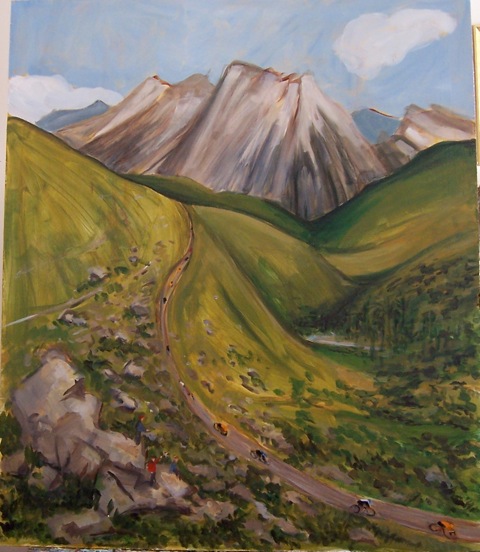
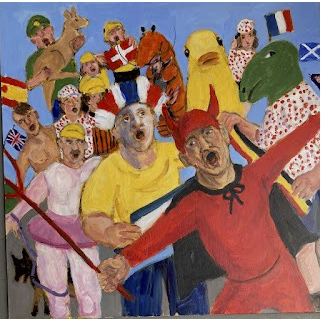
With gorgeous backdrops, colorful racing kits, and even more colorful fans, the grand tours and the one-day classics provide visual feasts. But while I have done over two dozen paintings of the races, cyclists, and fans, my interest in the sport goes beyond interesting visuals.
For one thing, cycling commentators are knowledgeable, humane, and experienced. Many were in the professional peloton. Others were serious amateurs or semi-pros, and they haven’t lost an awareness of the huge difficulties and dangers of the sport, nor an appreciation of individual effort, even when it falls short. There’s none of the yelling and provocation and personal aggrandizement that mars so much of our sports talk and commentary.
Winning races is undeniably important, but it isn’t quite everything in cycling. A long breakaway, a brave rider caught just before the finish line, a rider who finishes in spite of injury or a serious mechanical, the unsung but essential support rider, and the clever lead out rider are all not just acknowledged but celebrated.
Then there are the traditions, some quite romantic, of a sport that has not yet been completely corporatized. In le Tour, it is still traditional for the peloton to wait for a leader who has an accident or a mechanical breakdown, and there are still examples of individual sportsmanship that probably drive result-conscious team managers apoplectic.
There was Roman Bardet stopping when his countryman, Julian Alaphilippe, plunged off the road, ensuring a rival would be quickly rescued; Tour contender Jonas Vinegaard waiting for Tadej Pogacar on a risky descent, and the same Pogacar, undoubtedly the greatest modern grand tour rider, calling his whole team, support people, soigneurs, and mechanics up on the Tour de France podium for a photo.
All this is possibly why I have steered clear of cycling as a setting for murder and mayhem. Still, it has represented both a temptation and a challenge. The riders are useless as either perpetrators or sleuths because they are totally caught up in effort, eating, and recovery. It takes a monstrous amount of calories to ride over alpine passes, negotiate cobble stone streets, and manage mountain descents, not to mention speeding along in packed pelotons at fifty plus kilometers an hour.
Commentators are no more useful, as by and large they are watching monitors at the finish line, catching quotes from the exhausted winners, or setting off for the start of the next stage. It was only when I thought of one of my favorite old riders, the Scottish time trialist and grand tour stage winner, David Millar, now a businessman and an excellent writer and blogger on cycling, that I was able to concoct a character with enough flexibility to serve as investigator.
My Ivor is just starting out as a commentator. His current role is to write blogs on interesting events and colorful characters and to scope out the day’s big climb or the final kilometer that will face the sprinters. He has enough time away from the computer and the monitors to get into trouble.
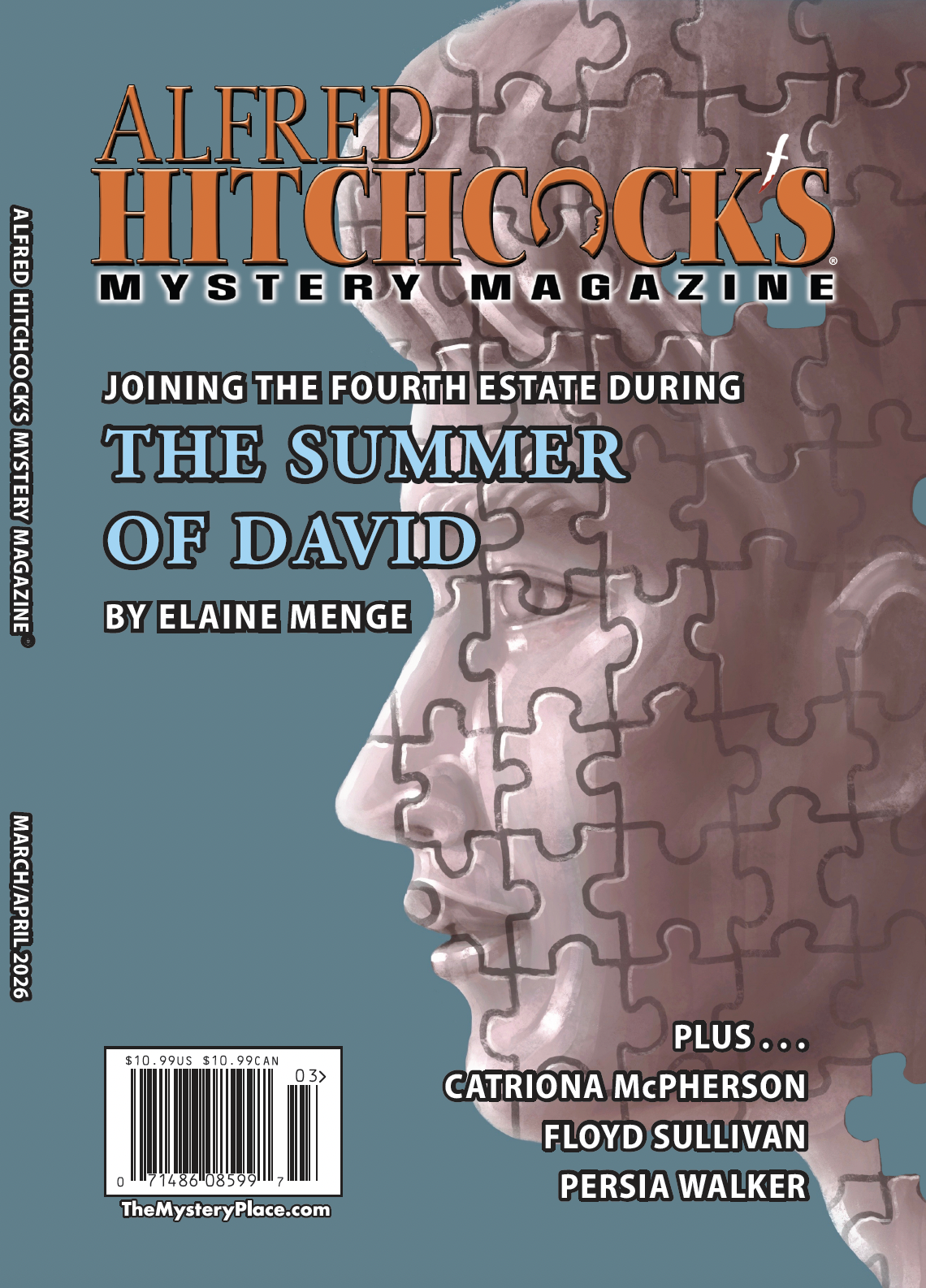
With everyone else occupied, that trouble can only come from the fans, and who better to stir the pot than the Devil? Why the pitchfork and tail? Why the dinosaur masks, the fuzzy dyed wigs, the inflated kangaroo, the fat suits, the Borat monokinis? You’ll find out in “The Devil at Le Tour.”
 Trace Evidence