
The very first short story I sold to Dell Magazines, was “Pigskill”, published in 1993 by Ellery Queen Mystery Magazine. I owed the germ of the plot to a couple of paragraphs in The Telegraph. My husband, an international soccer specialist, had a subscription, because back in the pre-internet days, the London paper provided updates on European “football” and, more importantly to me, excellent crime coverage.
One piece that caught my eye was the tale of an Avon Lady, in those days a door to door traveling saleswoman, who had been murdered on her rounds and disposed of via the denizens of a local pig farm. This item lodged in my mind. Eventually, after a fair bit of time and an uncomfortable call to a swine specialist at the Connecticut Agricultural division, it became a story about an impulsive vacation romance that ended badly all round.
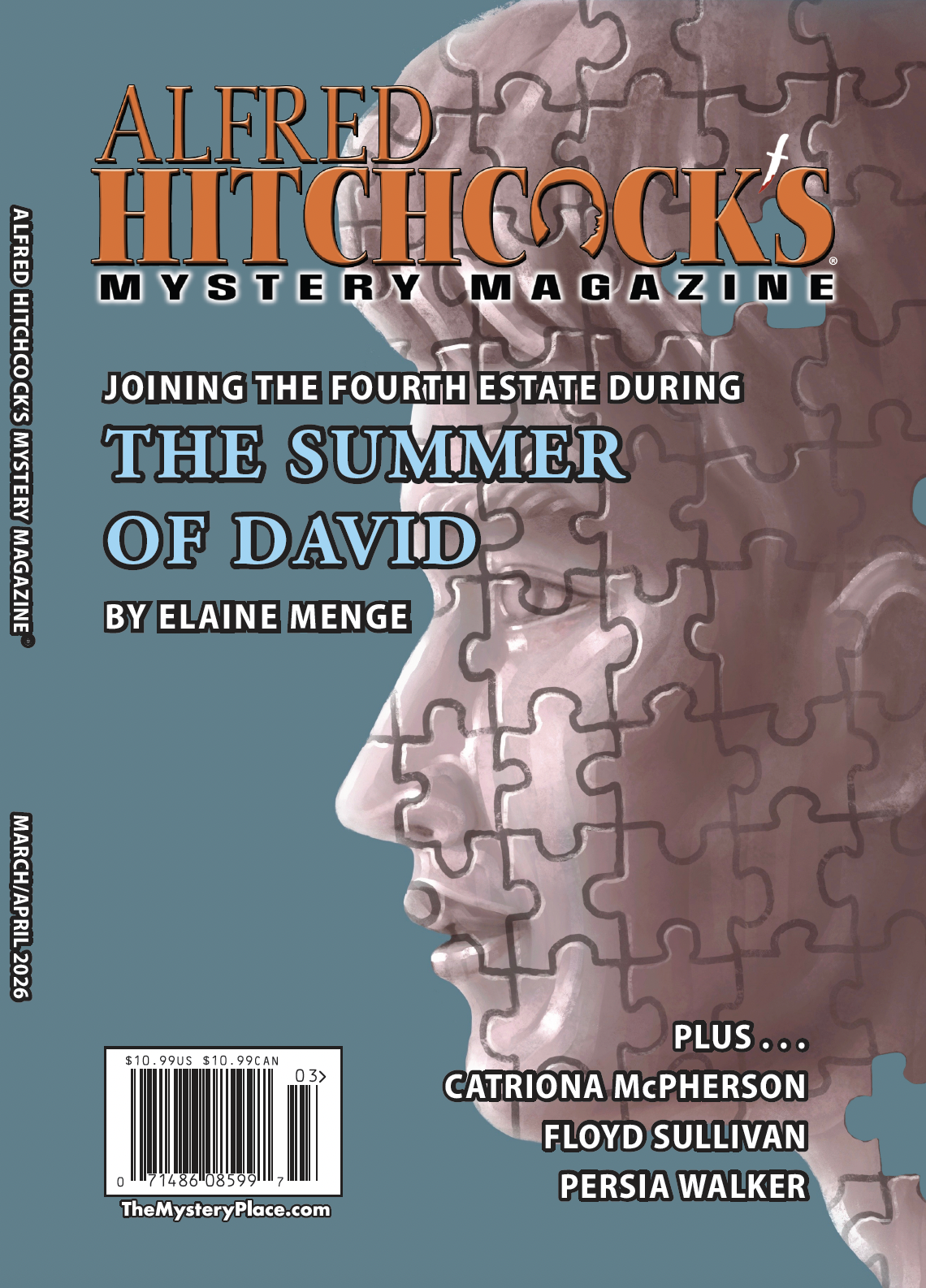
My most recent story for Alfred Hitchcock Mystery Magazine, “Up and Gone,” had a similar genesis, this time from a much more recent story in The New York Times about a wife and mother who had vanished in the 1970’s, seemingly without a trace. Her husband told the children she had simply left, and although he was himself a policeman, he never reported her missing.
A skeptical reader may think fortunate that he died before modern DNA matched a long unidentified corpse with family DNA. But the children insisted that their father was a good man, a careful father, all in all a good citizen. Unlike the genesis of “Pigskill,” this sad story struck me as one about consequences and aftermath and uncertainty, and the crucial part of the story was the impact of their ambiguous inheritance on the children. This was a novel in embryo, not a short story, and I am retired from novel writing.
However, one little detail stayed with me: the fact the husband did not report his wife missing and, beyond telling the children she was gone, never explained, never speculated—a striking passivity, especially in a cop. I wondered about that attitude, and eventually Grant and Evelyn arrived, an unhappily married suburban couple, both dissatisfied, both open to a change in circumstances, and neither one a particularly moral character.
This, in fact, is how most of my stories and novels have been conceived: something, often in the press or otherwise in print or on TV, presents an idea. After a while, sometimes a few weeks, sometimes several years, the idea appears in a different context and develops into a story.
For, although my excellent early editor Ellen Joseph quite liked stories “ripped from the headlines,” a direct borrowing of the narrative line has never worked for me. If I know the whole plot from start to finish, I cannot make myself write it out. For me, the pleasure of composing both novels and stories is the elemental pleasure of learning what happens next.
So it was with “Up and Gone,” where a disappearance opens the possibility of happiness, and where societal disapproval turns out to have a dangerous upside.
 Trace Evidence