

With over twenty-one million books sold and 19 Sunday Times No.1 sellers, Peter James is among the most accomplished crime writers in British history. The author of the world’s first electronic novel way back in 1993, James is recipient of the Crime Writers’ Association’s Diamond Dagger for lifetime achievement for crime writing in the English language. His most famous creation, Detective Superintendent Roy Grace, is a household name in the UK and the subject of stage plays and a hit television show, Grace, now available in America. No man to rest on his laurels, Peter has a new DS Grace novel just released, Stop Them Dead, and takes a pause from his whirlwind schedule to chat with us at Trace Evidence and Alfred Hitchcock’s Mystery Magazine about his early life, current work and the state of crime fiction.
William Burton McCormick: Welcome to Trace Evidence, Peter. Early in your life, your mother Cornelia was glovemaker to Queen Elizabeth II and you worked as a house cleaner for Orson Welles. What are your memories about your connections to those iconic figures and did any of those images somehow make it into your writing?
Peter James: When I was 20 and at film school I had just enough money from my parents to eat, pay my rent in London and travel to and from the college. But no surplus. There was a girl I wanted to take out, who I knew had expensive tastes, so I decided I had better earn some extra cash! I saw a sign in a newsagent window “CLEANER WANTED – APPLY MRS. WELLES” and the address was just around the corner from me in Fulham. I turned up, not making any connection to the name, and this very elegant and pleasant woman looked at me in surprise and said, “Well, I was rather expecting a woman to apply.” I persuaded her to give me a trial period, which she agreed to. I had no idea how to clean a house but there had been plenty of adverts on telly for household appliances and cleaning materials, like Flash, so I just got on with it. On my second day, I was on my knees cleaning the skirting board in the hall when the morning post fell through the front door and I saw all these letters addressed to “Orson Welles.” Not always being the sharpest tack in the box, I still did not connect to “Mrs. Welles” and wondered if there had been some kind of error by the postman! A short while later the front door opened and in came the great man himself. I stared up at him in shock and in awe, suddenly realizing that a golden opportunity had presented itself. If I could get him to like me, maybe I could get a huge leg up my future career path! I was a bag of nerves. He looked down at me with an amiable smile, the kind of smile he might have given to a funkily shaped dog turd, stepped past me with a cursory “Good morning” and vanished up the stairs as I gasped out a strangled reply. Later that day he left for the US and I never saw him again! Two weeks later, Mrs. Welles very sweetly told me she didn’t think I was really cut out for this job. I had to agree. . . . But it taught me a lesson for the future—always grab an opportunity!
Regarding my mother as the Queen’s glovemaker, one of my earliest childhood memories is of my mother, sitting in armchair, watching Sunday Night at the London Palladium on television, whilst repairing one of the Queen’s gloves with a needle and thread! The Queen’s gloves got a lot of wear and tear—she was in the Guinness Book of Records as having shaken more hands in one day than anyone else. My mother was both a fierce Royalist, and immensely proud of her Royal Warrant, and she would not let anyone else touch Her Majesty’s gloves. Incidentally, and I only say this in jest, there is only one other author I know whose family were glovemakers—and that was Shakespeare!
WBM: Speaking of filmmakers other than Orson Welles, Trace Evidence, as you know, is the blog of Alfred Hitchcock’s Mystery Magazine. Were the films of Alfred Hitchcock influential to your work for screen or printed page? If so, in what ways?
PJ: Hitchcock has always had a big influence on my writing. He portrayed the “sinister everyday” so brilliantly, and he also laced some of his darkest moments with truly black humour—such as in Psycho. It really showed me how well humour can work as a counterpoint to fear. And another very big lesson I learned from Hitchcock was about firing the reader’s imagination. That shower scene in Psycho is one of the most famously scary scenes in all of movie making and yet we actually hardly see anything at all—it is our imagination that sees it.
WBM: Do you think Hitchcock is still relevant today?
PJ: Oh my God yes! More relevant than ever as the movie and television industries seek to replace characters, story and plot with action and special effects.
WBM: During the Golden Age of Mystery Fiction from the early to mid-twentieth century there were significant thematic, tonal and stylistic differences between British authors like Dorothy L. Sayers and Agatha Christie and their American crime fiction counterparts such as Raymond Chandler and Dashiell Hammett (to name only the most prominent few.) Do you feel there are still significant differences in crime writing on either side of the Atlantic or have those traditions eroded in our modern interconnected world?
PJ: The gap has narrowed a little but there are still very big differences. One fundamental difference I’ve always felt is that in UK crime fiction, the victim, or first victim, is usually dead on the opening pages, whereas in US crime thriller fiction, the victim is alive but in peril.
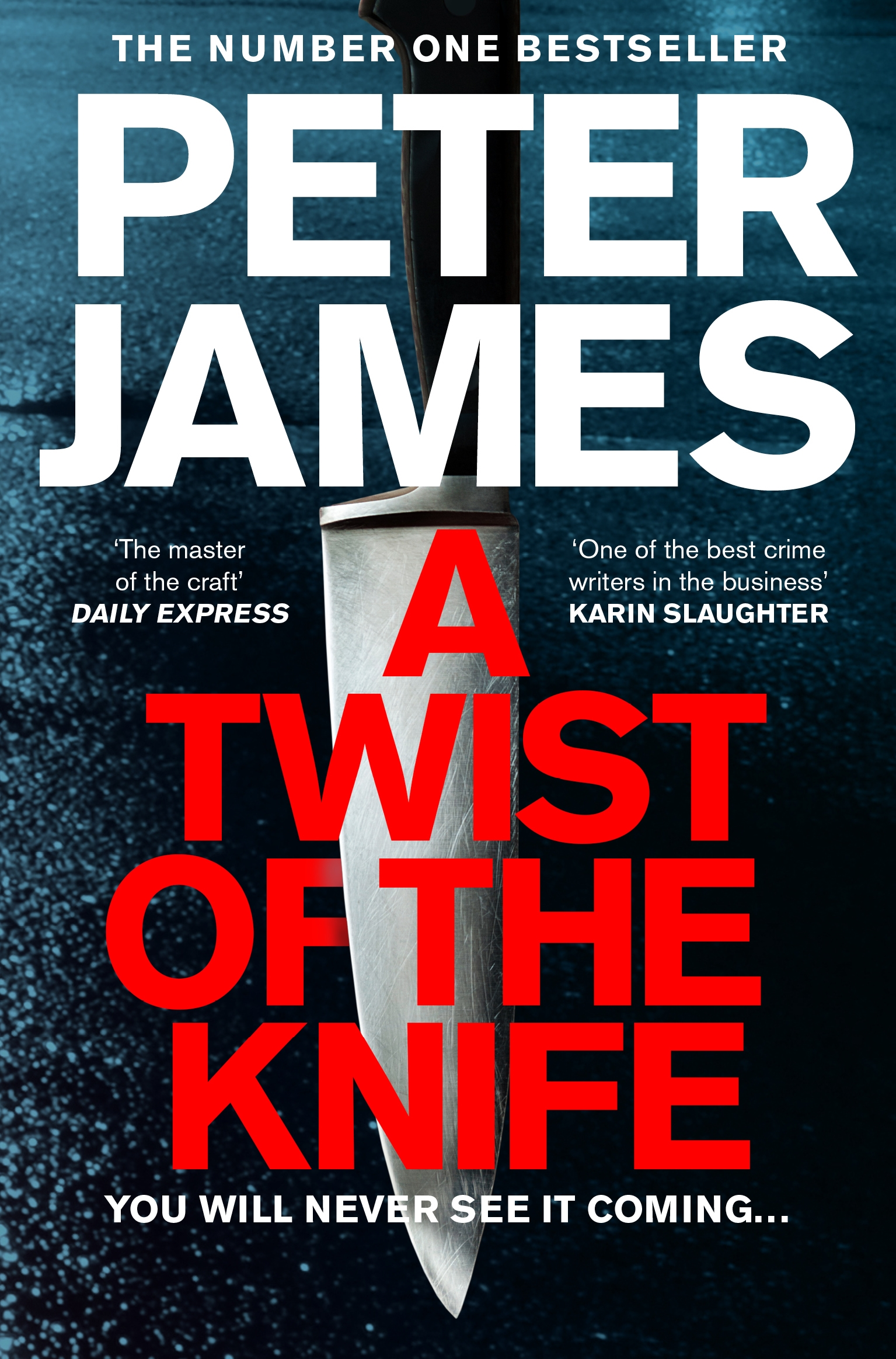
WBM: Alfred Hitchcock’s Mystery Magazine publishes short form crime fiction. In addition to your novels, you’ve written numerous short crime tales (many of which are collected in A Twist of the Knife). What do you like about the short form? What are the challenges of the short story for the career novelist? And how do you decide what ideas best fit a novel, novella or short story?
PJ: I love short stories as I enjoy exploring themes that wouldn’t make a full-length novel—and also, I love to write really short, sharp shockers. But I do find them hard to write. The first draft of a Roy Grace novel, which will be around 120k words, takes me seven months. But it can take me two weeks to write a short story of just 1k words! In terms of deciding between a novella and a novel, it is very much a gut feeling for me. I’ve only written two novellas—The Perfect Murder and Wish You Were Dead—both for the Quick Reads Initiate, and both felt the perfect themes and length for me.
WBM: You do a lot of research with police forces throughout the world. I once read you were shot at in police car in Moscow. As someone who has lived in Moscow myself and writes crime fiction set in Eastern Europe, I’d love to know the details of that event. Did it inspire anything in your writing? What were your experiences like with the Moscow police force?
PJ: I got friendly with the then Chief of Police of Central Moscow, Alexander Havkin, back in 2007, on book tour, he arranged for me to go out on patrol in a response car. It was about 8pm and I heard what sounded like a car backfiring. Next thing I knew, the driver did a very fast U-turn and drove like crazy. I think they were worried for my safety, otherwise I think they’d have stopped and had a shootout!
Over a lot of booze with Alexander one night I asked him if the Russian Mafia was a figment of the West’s imagination. He replied that in 2000 the Moscow Police had lost control of the city to the Mafia and had only just got it back. I asked him how they could have lost control. “How much does a young police officer earn in London?’ was his reply. I told him around £27k. He told me in Moscow it was €3k. . . .
WBM: Detective Superintendent Roy Grace is an amazing character. What do you think it is about Roy that makes him so popular?
PJ: Thank you! I’ve always joked that if I was unlucky enough to have a member of my family murdered, Roy Grace is the detective I would want running the case. I think people like him because he is smart, but at the same time, very warm and human. I’ve had a string of fan letters from ladies around the globe telling me that Roy Grace is the only fictional detective they’ve ever fancied sleeping with!
WBM: DS Grace has been adapted into the acclaimed GRACE television series available on ITV X in the UK and BritBox in the US and Canada and now filming its fourth season. How closely does the television series follow the novels? How personally involved were you in the production and what was it like translating Grace to a series?
PJ: ITV have been a constant joy to work with, and they have tried very hard to remain as faithful as possible to the novels. There is only one book in the series where for a number of reasons, by mutual agreement, we wrote a largely original story. I’ve been involved at every stage, from scripts to cast, even down to the most minor cast member. And I could not be more thrilled with John Simm, nor with any of the other cast members, too.

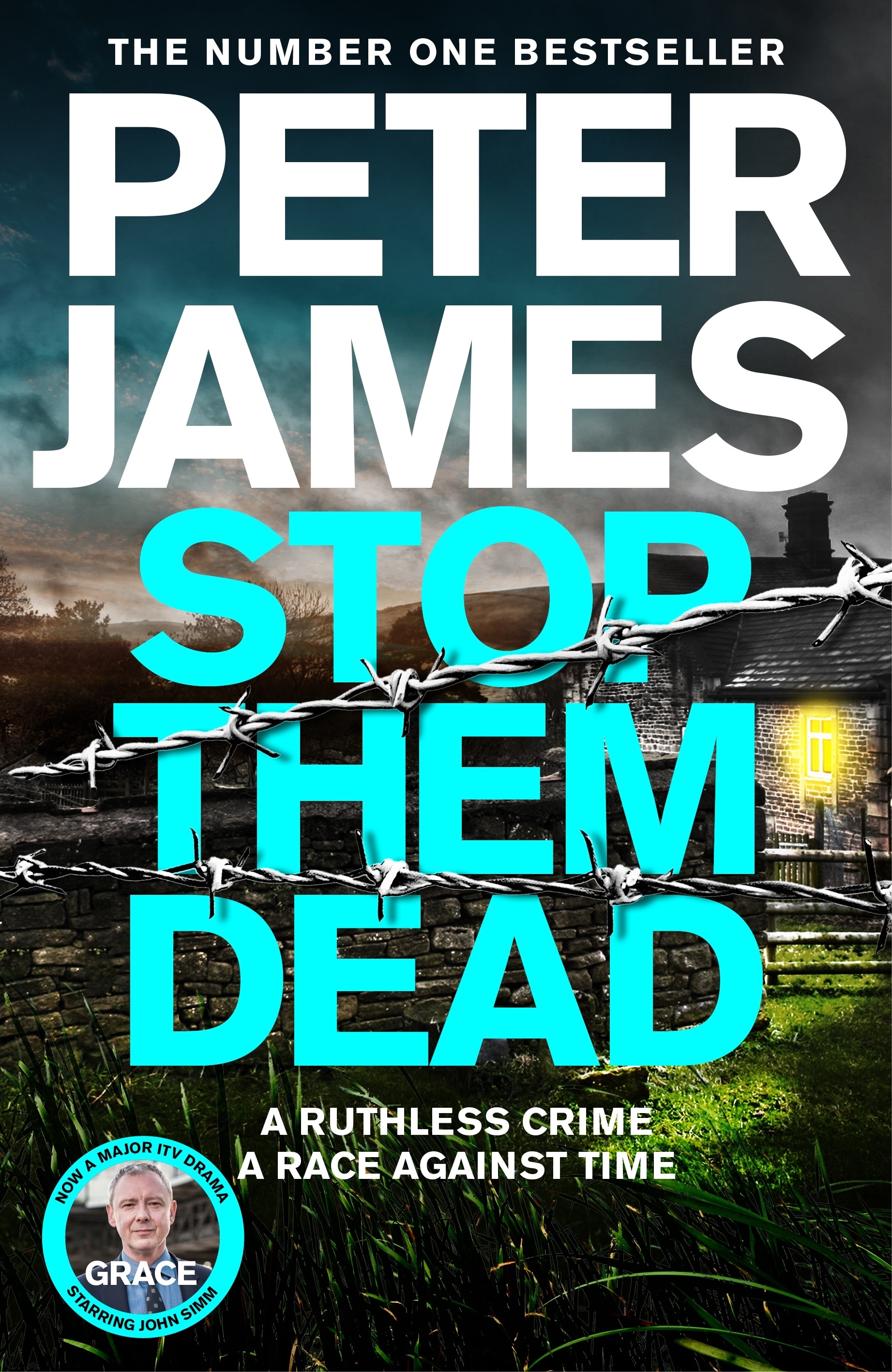
WBM: Your nineteenth Roy Grace novel Stop Them Dead was released this September. What is happening to DS Grace now?
PJ: I’m very excited about this novel. Roy, like myself—and my wife, Lara—is a dog lover, and he gets involved in the very dark world of the illegal puppy trade which exploded during lockdown, when the price of dogs went up tenfold. The Chief Constable of Sussex told me that Organised Crime Gangs were then and still are making more money out of illegally breeding, smuggling—as well as stealing—dogs than from drug—and with minuscule sentences if caught. And one of the very big, real dangers of this new trade is the risk of Rabies—a disease we have been free of in the UK for over 100 years. Countless dogs are being smuggled in daily from places like Romania, which have the highest incidence of Rabies in Europe—and with fake vaccination certificates. . . . And of course it features in my story! Although I do want to reassure all my readers that as a massive animal lover, I’ve not depicted any animals being harmed—only humans!
WBM: What makes Stop Them Dead unique in the series?
PJ: Throughout the series, some of my themes and storylines have come from true situations, and when I’ve been asked by the police if I would consider highlighting issues. I did this for example with Dead Tomorrow, highlighting the horrific international trade in human organs for transplants. I wrote Love You Dead after Sussex Police told me that people in Sussex, looking for love on internet dating sights had, over the previous three years, been conned out of over £15m from people with fake profiles. I think in some ways, drawing from the reality of what is actually happening, adds something to the novels. I hope very much it will be the case with Stop Them Dead, where I’ve worked very closely with both the police and with the RSPCA (which I’m a patron of) who have been brilliantly helpful.
WBM: What are your writing plans for 2024? Any other projects creative or otherwise for the upcoming year?
PJ: I have a very exciting year for 2024, with two novels coming out! The first, which will be in May, titled They Thought I was Dead—Sandy’s Story which tells the true story of Roy Grace’s missing wife, Sandy, from the day she disappears! I know a lot of my fans have been waiting for this for a very long time. . . . Then in September I have the 20th novel in the Roy Grace series coming out. The title will be announced soon! And we will have Season 4 of the Grace television series broadcasting early in the new year—with four new 2-hour episodes on Sunday nights on ITV1.
WBM: In closing, I know you were twice chairman of the Crime Writers’ Association and also involved at a senior level with International Thriller Writers. As a member of both associations we thank you for your service. How do you feel these and similar organizations like Mystery Writers of America should assist both new and established writers? How do you see these organizations evolving as we go deeper into the twenty-first century?
PJ: Most writers need help when they are starting out. I was very lucky to have the late James Herbert, who initially gave me advice and then became one of my closest friends, before his untimely death. Organisations like the CWA, SOA, ITW, MWA and others around the world play an invaluable role in so many ways. Writing is a solitary occupation and it is wonderful to emerge from our caves and meet fellow writers at events organized by these, as well as some of the really brilliant and friendly festivals we have in the UK, such as Harrogate, Capital Crime, Crimefest, and the plethora of wonderful smaller ones. Nothing ever stands still in life and that applies so much to writers. In 1934 paperbacks began to be published, bringing books to the masses. Now we have audio books taking 10% of the market and electronic books closer to 50%—and I’m proud to say my novel Host, published by Penguin in 1993, is in the Science Museum as the World’s First Electronic Novel! Mind you, I was pilloried to hell and back and accused of trying to destroy the novel, back then!
Writers need guidance on agents, on publishers and of course on the question so many ask is whether self-publishing is worthwhile. And perhaps the biggest question of all facing us right now, the new kid on the block, Chat GPT 4—friend or foe?
WBM: With that AI cliffhanger to ponder, we thank Peter for his time and close the discussion. If you want to chat more with Peter James he’ll be appearing on the Northern Ireland Libraries (Online) on October 19th and at the Peter James Yeovil Literary Festival on October 28th. Click the respective links to learn more or go to peterjames.com.

About the Interviewer: William Burton McCormick has no royal glovemakers in his family history, but his great-grand aunt was mistress to President Harding and conceived a child in the White House coat room. Other than that, William is an Edgar-award nominated writer of crime and thriller fiction set mainly in Eastern Europe. He is a regular contributor to Alfred Hitchcock’s Mystery Magazine and its sister publication Ellery Queen’s Mystery Magazine.
He prefers the novella form and is the author of three acclaimed novellas A Stranger from the Storm, Demon in the Depths, and House of Tigers, as well as the award-winning novel KGB Banker (co-written with whistle-blower John Christmas). His forthcoming Western Ghost was written with the late U.S. Senate Majority Leader Harry Reid. A native of Nevada, William earned his MA in Novel Writing from the University of Manchester in the UK. He has lived in seven countries for writing purposes including Ukraine, Latvia, Estonia and Russia. Learn more about his writing at williamburtonmccormick.com or by following him on Twitter (he refuses to call it “X”) at @WBMCAuthor.

 Trace Evidence