Sometimes I have no idea where I get the idea for a short story but I can tell you exactly what inspired “Professor Pie is Going to Die” in the May/June issue of AHMM. It was “Mr. Jolly Gets His Jollies,” by Tim Baker, which appeared in the January/February issue three years earlier.
Do I hear you mumbling the word “plagiarism?” Shame on you for such skepticism. While Baker’s story was terrific I didn’t touch his plot at all.
No, what connected for me was the name of one of the characters, J.P. Corguts, and the illustration by Kelly Denato, which included a clown. Together they made me think of J.P. Patches.
If you grew up in the Seattle area during a certain era it is likely that The J.P. Patches Show was your favorite TV program. From 1958 to 1981 Chris Wedes, in clown makeup, played “the Mayor of the Town Dump.” Along with Bob Newman who played his girlfriend Gertrude they entertained a generation of kids and after the show went off the air they continued to perform at charity events and children’s hospitals. They were so beloved that there is even a statue of them in Fremont, Seattle’s most eccentric neighborhood.
I grew up in New Jersey so I had never heard of Patches until I moved to Washington and he was off the air by then, but I was raised on similar shows from New York (Sandy Becker, Sonny Fox, Soupy Sales, etc.)
But once Tim Baker’s story made me remember Patches it got me thinking: I couldn’t recall any mystery stories about local children’s show hosts. I decided to write about an actor who played one such beloved character.
You can find on the Internet a list of thousands of local TV kids shows from around the nation and the hosts of many of them had titles of respect: Officer Joe, Miss Becky, and so on. I got halfway through the list before I got tired of writing them down: Admiral, Commodore, Skipper, Captain, Sergeant, Sheriff, Deputy, Marshal, Ranger, Mother, and Grandpa, plus enough Uncles and Aunts to crowd a family reunion.
So my character became Professor Pie. Many years after the show leaves the air the actor who played him returns to the city of his fame for a nostalgia fair, only to discover that someone very much doesn’t want him there.
I hope Patches and Gertrude never faced such danger.
Computer Science pioneer and U.S. Navy Rear Admiral Grace Hopper said, “A ship in port is safe, but that’s not what ships are built for.”
There are a lot of ships leaving port these days. People are quitting, leaving the safety of their jobs, in record numbers. There’s even a name for the phenomenon. In the midst of the pandemic, back in 2021, Texas A&M University professor Anthony Klotz first coined the phrase the Great Resignation.
The field of education is no exception to this new mass exodus. Teachers seem to be retiring, moving to new territory, and changing professions in record numbers. It’s not hard to find a disgruntled teacher. The demands of the job are all-consuming. A college professor of mine once told our class of budding teachers that if we were doing the job the way it needed to be done, we would barely be able to squeeze in three meals a day. He might have been exaggerating some, but not by much.
Most likely there are a lot more disgruntled employees of all types out there who would opt to jump on the quitting bandwagon and get the hell out of Dodge if they weren’t so practical and such sticklers for minor details in life, like paying their bills and feeding their families. And so they remain. Fear of an unknown future keeps them in their safe port.
Readers in general, and mystery readers in particular, often ask writers about where their ideas for stories come from. My answer to that is often “What if?’
I wrote the story Murder, With Resignation in the summer of 2020, well before the term Great Resignation went viral. But the idea for the story goes back even farther, to one of the times when I confess to playing the role of disgruntled teacher myself.
About twenty-some years ago, towards the end of one particularly frustrating school year in public education, I made it be known to a number of my colleagues that I wouldn’t be returning the next year. At the time, I hadn’t yet found another job. Some of them likely thought I was just venting. That I’d be right back there with the rest of them in late August, wolfing down doughnuts and fruit at the breakfast buffet on the teachers’ opening day.
In midsummer I found another job. I dutifully resigned my position with the county school system, turning in my letter of resignation, and signing the required paperwork in person.
My wife was still a teacher with that same school system. With my new job I had the day off when she was set to go back to work for the opening day countywide meeting. I joked that it would be funny if I tagged along and enjoyed the pre-meeting refreshments. We had a good laugh about it. Wondering how long it would take for someone in authority to confront me for being there without reason. Believe me, I’d be the last person to actually do such a thing.
But my little joke got me thinking about an idea for a story. What if a teacher who’d shot off his mouth about quitting was out of touch with everyone over the summer. And all indications were that he’d moved on. And what if someone with ulterior motives sent a letter of resignation for him, setting up an instant conflict on the day of his return.
I made notes on the inspiration and filed them away with all the other ideas for stories I’d been stockpiling over the years, waiting to find the time to get around to the business of writing them. Over the years, I did get around to finishing some stories. But a lot of my ideas had to wait until I retired. Now, after finishing up a forty-year career of teaching high school mathematics, I’ve been fortunate to be able to pursue my interest in writing.
The idea for the characters of Pete Barrow and Sheriff Oscar Murphy goes back even farther than the origin of the story idea for Murder, With Resignation. I’d started writing fiction in my senior year of college, back in Pennsylvania, at Lock Haven State, under the tutelage of Professor Joe Nicholson. In the early 1980s I signed up for a class on writing short stories at Virginia Commonwealth University, in Richmond. I enjoyed the class at VCU and wanted more. So I followed up by enrolling in another class at VCU on writing a novel. The class was taught by a great guy named Robert Hilldrup.
Beginning writers are often advised to “write what you know.” So for my mystery novel, I created the character of Pete Barrow, a high school math teacher who moonlights as a private investigator. The character of African American Sheriff Oscar Murphy followed.
Bob Hilldrup gave me a lot of praise and encouragement. The novel was off to good start, but life got in the way. We moved to another state for new teaching positions and had our first child. Teaching and family took up most of my time. I kept working on the book when I could, mostly in the summers. It took me more than ten years to finish it. But when it was done, I wasn’t satisfied with it. I put it in the proverbial box under the bed and let it rest. When I wrote again, I worked on my short fiction.
But I never gave up on those characters. And when it came time to resurrect them for the short story, Murder, With Resignation, I wanted to rethink the characters as present day, older, wiser, and experienced people, not the young people I’d created in the time of my own youth.
Murder, With Resignation is the first in a series stories I’ve written with these characters. I envision a novel or two in Pete Barrow’s future. Thanks to editor Linda Landrigan and all the folks at Alfred Hitchcock’s Mystery Magazine, Pete Barrow finally makes his debut in the annals of P.I. fiction.
My advice to younger writers would tend to be of the ‘do as I say, not as I’ve done’ variety. Something teachers are not supposed to say! Don’t count on waiting until retirement to settle into a regular writing routine. Find your quiet place, and set up a regular routine to devote a set amount of time to your writing. It could be an hour a day, or an hour a week. Whatever you can spare. Write a paragraph or a page. Whatever you can accomplish. Real life is busy, and deserves our attention. But the personal need to spin a tale, tell a story, inform or caution, educate or entertain, can be an overwhelming force. If that’s something you need to do, stick with it!
Back in 2018 Paul McCartney released an album named Egypt Station that included a song called “Do It Now.” The song contains good advice in the lyrics:
“So do it now, do it now
While your vision is clear
Do it now
While the feeling is here
If you leave it too late
It could all disappear
So do it now
While your vision is clear“
Excellent advice for all, but especially for writers.
Andrew Welsh-Huggins discusses some of the political inspiration behind his upcoming story featured in our [May/June issue, on sale mid-April!]
I love a mystery or thriller set in Washington D.C.’s halls of power as much as the next guy. From David Baldacci’s 1996 debut novel, Absolute Power, to Matthew Quirk’s more recent (2019) book, The Night Agent, nothing makes for propulsive reading like a high-stakes adventure with the fate of the nation in the balance.
Still, the District of Columbia doesn’t have a lock on political storylines. When seeking an arena rife with motives for murder and mayhem, consider mining state capitols, whose combination of influence peddling and deal-making easily conjure up Obi-Wan Kenobi’s Star Wars assessment of the Mos Eisley spaceport: “You will never find a more wretched hive of scum and villainy.”
I spent nearly a quarter century reporting for The Associated Press in Columbus, and a good chunk of that time involved coverage of the governor—five in my case—the state Legislature, the Ohio Supreme Court, and a multitude of state agencies and boards. Midway through my tenure, when I donned a cap as a fledging mystery writer, I had plenty of material on hand for my fiction.
While I included references to lobbyists and lawmakers in my first two books, I jumped in feet first with the third novel in my Andy Hayes private eye series, 2016’s Capitol Punishment. In that book, a reporter hires Hayes for protection after the journalist’s Statehouse exposés result in death threats. When Hayes drops the ball, the reporter ends up dead in the middle of the Statehouse rotunda—about as public a place to die as there is in Columbus. Blaming himself for the tragedy, Hayes finds himself deep in the weeds of all three political branches as he tries to unravel the mystery and save a candidate’s life to boot.
I next delved into this dangerous territory in my short story, “Going Places,” for the 2020 Columbus Noir anthology that I edited for Akashic Books. In that tale, even as the governor’s bodyguard spends his days keeping his boss’s extramarital affairs quiet, he embarks on his own illicit relationship with deadly results. Let’s just say, even though I haven’t covered a real Statehouse murder—yet—much of the story’s shenanigans had past and present precedent.
This brings me to “From Another Angle,” my latest Alfred Hitchcock Mystery Magazine story in which I return Andy Hayes to the scene of the crime, so to speak. When the erratic behavior of a state representative on a key energy committee threatens to derail party priorities, Hayes is hired to figure out what’s going on. He’s reluctant to take the job because the mess he uncovered—and barely survived—in Capitol Punishment still haunts him. True to form, the secrets he unearths aren’t pretty.
Based on my reporting experience, as well as spinning those stories into (hopefully) fictional gold, I recommend state capitols as prime crime fiction real estate for three reasons:
It’s not national security, but the stakes are still high. Governors, state lawmakers, and state supreme court justices enact, approve, and review legislation that has a far greater impact on our daily lives than their Washington counterparts, from the quality of the roads we drive on, to the excellence of schools our children attend, to our ability to punish—and to reform—criminals. And behind every one of those bills is an army of lobbyists with powerful agendas.
Colorful characters abound. One recent Ohio governor delighted in calling California residents “wackadoodles.” A state lawmaker renowned for fiery floor speeches once opined on alternatives to lethal injection by saying: “We’ve got plenty of electric and plenty of rope.” Then there was the Ohio Supreme Court justice who declared on Facebook: “In the last fifty years I was sexually intimate with approximately 50 very attractive females.” No matter how preposterous you think one of your characters might be, trust me, she or he has a real-life legislative counterpart.
Relatable rascals. Although plenty of people have toured the U.S. Capitol and maybe can boast of meeting a president, far more have interacted with state lawmakers—either in their state capitol or at a district office—a boon to writers looking for a built-in audience. Even in these days of online access to hearings, the halls of the Ohio Statehouse are still crowded with citizens attending committee meetings, talking to their legislators, or just touring the gorgeous facilities their tax dollars paid for. State lawmakers can be just as aloof and corrupt as their Washington counterparts, but a lot of them still live next door.
There you have it: relevance, rich personalities, and relatability, all packaged in one central location. Let the (fun and) games begin!
I am delighted to have a story in the March/April issue of AHMM. In “Shanks’s Role Model” my mystery writer protagonist goes to a college reunion and is reminded of some strange events from his undergrad days.
It’s all fiction, of course, but I thought you might enjoy hearing about the true events which inspired my tale.
I went to a tiny college in Pennsylvania, a state where the settlers of each new town seemed to build a church, a college, and a grocery store in that order. One Saturday night when I was a freshman there was a small fire in the dorm next to mine. Everyone got out safely and no serious damage was done, but it was obviously a case of arson. Cops investigated but nothing came of it.
A few weeks later I was on the top floor of Founders Hall, waiting for an appointment with my advisor, when things got exciting. Founders Hall, the first edifice built on campus, was four stories, largely made of wood. Nearly hundred-year-old, very dry wood, if you want to get technical. Tinder might be the word I’m reaching for.
The fourth floor had been student bedrooms a century ago and now they were tiny, cramped, faculty offices. I was sitting on the floor in the hall near my advisor’s office when I heard fire sirens outside. The little windows at the end of the hall didn’t provide much of a view so I couldn’t tell where the fire engines were going.
Then someone came running up the stairs, a guy who lived in my dorm. “Hey, Dan,” I said. “Where’s the fire?”
Dan looked at me, wild-eyed, and said something I will never forget: “Hwaaugghhhh!” Then he grabbed the fire extinguisher and ran down the stairs with it.
Hmm, I thought, shrewdly. This might be a problem.
I knocked on my advisor’s door.
He replied, irritably: “I’m with a student!”
“Dr. Bruce,” I said. “I think the building’s on fire.”
“Oh. You better knock on all the doors.”
So I did. Quickly. First I crossed the hall to Professor Berry and gave her the word. As I proceeded down the hall professors and students formed a tide behind me, heading toward the wooden stairs.
When I got back to Bruce’s end I saw Professor Berry standing in his doorway, frowning. “What are you doing?” she asked.
Bruce was standing in front of his bookshelves, a hand on his chin, looking thoughtful. “I’m trying to decide which books to take.”
“The building’s on fire. Grab anything.”
He did. Then we ran for it.
Fortunately the blaze turned out to be a small fire in a basement storeroom, and we all survived to tell the tale. They arrested the arsonist who was a student and (is anyone surprised?) a volunteer fireman.
But I will always remember Dr. Bruce at that moment of truth, trying to decide which books to take.
I imagine my character Shanks would have just as much trouble. I hope you enjoy his story.
When I married Temple Walker in November 2015, I did not realize I was marrying into a crime family. I’m not certain she realized it, either.
Not long after our marriage, Temple and her father—James Lincoln Walker, aka Jim—took an interest in family history and soon discovered multiple miscreants in various branches of their family tree. One stood out: Merle Dees, an indicted participant in the 10-day Louisiana Milk Strike of 1947, was Jim’s uncle by marriage (his mother’s sister’s husband).
The strike, referred to by the Times Picayune (April 4, 1947) as a “10-day reign of terror” during which “trains were held up, trucks and cars riddled with buckshot and rifle slugs and at least one person wounded,” prevented most milk deliveries to New Orleans.
The strike, called by the Dairymen’s Union (AFL) of Amite (La.) and Tangipahoa (La.) and later joined by AFL-affiliated teamsters’ locals, was, according to the Times Picayune, in response to a “drop of milk price from $5.75 to $5.20 a hundredweight for fluid containing 4 per cent butterfat.”
Milk from the Florida parishes milkshed—the eight Louisiana parishes on the east side of the Mississippi River—was the first to stop flowing into New Orleans, but the strikers soon stopped outside shipments as well.
And more than milk was at stake. The Chicago Daily Tribune (March 27, 1947) noted that 5,000 to 6,000 New Orleans members of the teamsters’ union refused to make any deliveries to retailers who continued to sell milk sold by New Orleans distributors, whose price cut set off the strike. “Observers said this will mean virtual cessation of all food deliveries in the city, since nearly all truck drivers except those who deliver milk are members of the AFL union. The alternative, for retailers, apparently will be to sell no fresh milk.”
By the time the strike ended, approximately 80,000 gallons of milk had been destroyed, and twenty-five strikers were indicted by a United States grand jury in connection with alleged violations of federal law, including retarding the mail and breaking seals on railroad cars.
Temple’s Great-Uncle Merle Dees was indicted in a true bill in the District Court of the United States for the Eastern District of Louisiana, New Orleans Division (Docket No. 22,594) for “Conspiracy to Violate the Anti-Racketeering Act,” that is, he “knowingly, wrongfully, willfully, unlawfully and feloniously conspire[d] […] to obstruct, delay and affect interstate commerce and the movement of articles and commodities in interstate commerce by robbery and extortion.”
From Fact to Fiction
My father-in-law was a Louisiana-born retired mechanical engineer who spent a great deal of his free time reading mystery novels and watching televised mysteries. He and Temple—also a mystery lover—often discussed the books they read and the television programs they watched, sharing their favorites. That his daughter married a mystery writer must have amused him to no end.
At first, Merle Dees’s involvement with the Milk Strike was just a story passed down through the family, but Jim became intrigued by his uncle’s involvement. Here was a real-life mystery to be explored, and explore it he did.
As Jim sought more information about the strike, he began corresponding with Bill Dorman in the Genealogy Department of the Tangipahoa Parish Library, who provided PDFs of scanned newspaper articles and other information, which he then shared with Temple and me.
Before long, I realized the real-life adventures of my wife’s great-uncle could be the basis of a short story and, after rearranging some real-life events, working in a few other family stories, and then fictionalizing everything, I had “Spilt Milk,” published in the November/December issue of Alfred Hitchcock’s Mystery Magazine.
My father-in-law passed away on Friday, January 13, 2023, so he didn’t live to see the story in print. He did, however, read the finished story in manuscript form before I submitted it.
A mile from where I grew up stands the Crescent Hill Free Public Library. It was built along Frankfort Avenue in 1905, one of over a thousand U.S. libraries built on money from none other than Andrew Carnegie. I didn’t know that at the time, nor did I understand the architecture was a shining example of Beaux-Arts style. To me, that building was a castle full of books.
Crescent Hill sprung up in the 1850s as Frankfort Avenue, then the Louisville and Lexington Turnpike, cut eastward. Because Louisville has always embraced a certain style, the houses and churches that came in were ornate. Streetcar lines followed. This new suburb prospered.
Until it didn’t.
By the time I came along, Louisville’s gateway era was over. Crescent Hill had evolved into middle-class bohemian meets rough around the edges. To get to the Library, the left onto Frankfort was a seedy corner joint with blacked-out windows. The theater a few doors down showed X-rated flicks.
But oh, that weird charm, that ten minutes from anywhere location. By my college days, great bars and restaurants were returning along Frankfort.
Years later and two hundred miles away, I decided to try my hand at short fiction. One of my drivers was to write stories with huge doses of character. In 2012, I must’ve written a publishable one, because a Canadian lit journal made it my first acceptance.
In that story, an engineer named Vi Celucci battles corporate shelving algorithms to maintain her grocery shopping regimen. This fictional store sits a short hop from Crescent Hill, as inspired by the Clifton institution revered as Dirty Kroger. My dad shopped there religiously, and so did I when I got an apartment not far off.
Vi is tough, smart, and cursed with a glorious flaw. She can only see this imperfect world through her industrial engineer lens. Everything can be optimized—should be optimized—and, once done, managed. Back then I’d been working with my share of industrial engineers, and wonderful as they are, they’re of a breed.
Pro tip: Go find one and make them your friend. You’ll get more things done.
With Vi, I took that engineer mindset, tossed in my own stickler impulses, and cranked the mix, a la Spinal Tap, to eleven. Someone that obsessed with rules and efficiency can’t let anything go. Anything, and it costs them. The torrent of minor failings, the constant wheedling of supposed underperformers, the inevitable let-downs, the surrender to intellectual compromise. All of it would be exhausting.
I’d thought Vi could make a fun amateur sleuth. I let her loose after a counterfeiting scam around Crescent Hill that taxes her last nerves. That must’ve worked, too. AHMM ran “Two Bad Hamiltons and a Hirsute Jackson” in 2015.
Then I didn’t write Vi again. No story idea screamed for her. A Vi story can’t have a crime so serious it spoils the tone. And like her neighborhood, a Vi crime has to be weird, something tiny but torturing to her perfectionist soul.
Eventually, inspiration struck. You might’ve heard that horse racing is big in Louisville. So big, in fact, that a whole charity effort sponsors fanciful horse statues around town. Each statue—and there have been hundreds—has a unique theme that ranges from whimsical to flat-out gorgeous, and each stands as commissioned sidewalk art until they’ve run their race, so to speak. Such a unique feature along Frankfort Avenue would be a landmark Vi latches onto full bore.
So I put a Plexiglas Horse a block from the Crescent Hill Free Public Library. Then, I had someone steal it. Vi’s ensuing Kentucky-fried odyssey forces her to sift through the noise and discover what really matters. Eight years later, Vi is back in AHMM.
I still get up to Louisville often. While polishing “Know Thyself,” I walked Frankfort Avenue up and back. The high times are doing fine, with legit hip and enough pubs for a proper crawl. That castle of a library is much smaller than I remember, inside and out. I donated an armload of books, some with my stories in them.
Life is complicated. We feel better when our feet are on familiar turf, somewhere we have a semblance of control. Offbeat as Vi is, we all have some of her in us deep down. We all reach out for familiar turf. We need to understand where we’ve been, where we’re headed, where we’ll always belong.
Although I spent my entire childhood (and beyond) in the library, I also spent it watching television. (My father claimed he bought the first television owned by any family on our block in Brooklyn, NY.) So I have seen every detective show ever produced. And then, when I was in high school, I sat next to a girl who was drawing stick figures with a halo over its head. And that’s when I first learned about Simon Templar “The Saint,” mystery writers, and going to used book stores. So I have also read every celebrated mystery writer—although it never occurred to me to write a mystery until a few years ago.
An old friend of mine from Star Trek conventions, who is also a lawyer and a writer, told me about a writing contest that had to feature some aspect of the law. Since I spent at least 20 years hearing her complain about having to maintain rigorous files, I used that as a jumping-off point to write “Who Killed What’s Her Name?”—the first mystery story I ever wrote and which AHMM published. The protagonist is a combination of myself and my friend; we’re both old, cranky, and forgetful but, fortunately, she is a lawyer emeritus and remembers enough to vet all legal aspects of what I write about.
My latest story, “Beam Me Up, Elsie” was inspired by my career as a book editor specializing in genre fiction, particularly science fiction. Again, I probably spent more than 20 years going to a variety of conventions and, by combining some well-known actors, authors, and various movies, I came up with a hopefully entertaining as well as informative mystery. And I managed to work in plenty of “in jokes.”
Although I have done books in the past, and still have novels I should be finishing, I really enjoy writing short stories and learning how to write mysteries. Particularly how and where to drop clues, and to show the procedures by which mysteries are deduced. I especially am trying to write stories that are not your standard murder mysteries. The one I’m working on now is about a probate squabble featuring an attempted poisoning. And the next one after that is about a possibly cursed box constructed to look like King Tut’s sarcophagus–based on my lifetime interest in the paranormal. So don’t expect me to write about dead bodies for quite a while, though I might throw in some ghosts. And now that I think of it, my other pastimes, which include vending at Native American pow-wows as well as antique shows, plus my extensive knowledge in those areas, could also provide more inspiration for non-traditional stories. So I better get to work. . . .
Best-selling author Peter James (credit: James Clarke)
With over twenty-one million books sold and 19 Sunday Times No.1 sellers, Peter James is among the most accomplished crime writers in British history. The author of the world’s first electronic novel way back in 1993, James is recipient of the Crime Writers’ Association’s Diamond Dagger for lifetime achievement for crime writing in the English language. His most famous creation, Detective Superintendent Roy Grace, is a household name in the UK and the subject of stage plays and a hit television show, Grace, now available in America. No man to rest on his laurels, Peter has a new DS Grace novel just released, Stop Them Dead, and takes a pause from his whirlwind schedule to chat with us at Trace Evidence and Alfred Hitchcock’s Mystery Magazine about his early life, current work and the state of crime fiction.
William Burton McCormick: Welcome to Trace Evidence, Peter. Early in your life, your mother Cornelia was glovemaker to Queen Elizabeth II and you worked as a house cleaner for Orson Welles. What are your memories about your connections to those iconic figures and did any of those images somehow make it into your writing? Peter James: When I was 20 and at film school I had just enough money from my parents to eat, pay my rent in London and travel to and from the college. But no surplus. There was a girl I wanted to take out, who I knew had expensive tastes, so I decided I had better earn some extra cash! I saw a sign in a newsagent window “CLEANER WANTED – APPLY MRS. WELLES” and the address was just around the corner from me in Fulham. I turned up, not making any connection to the name, and this very elegant and pleasant woman looked at me in surprise and said, “Well, I was rather expecting a woman to apply.” I persuaded her to give me a trial period, which she agreed to. I had no idea how to clean a house but there had been plenty of adverts on telly for household appliances and cleaning materials, like Flash, so I just got on with it. On my second day, I was on my knees cleaning the skirting board in the hall when the morning post fell through the front door and I saw all these letters addressed to “Orson Welles.” Not always being the sharpest tack in the box, I still did not connect to “Mrs. Welles” and wondered if there had been some kind of error by the postman! A short while later the front door opened and in came the great man himself. I stared up at him in shock and in awe, suddenly realizing that a golden opportunity had presented itself. If I could get him to like me, maybe I could get a huge leg up my future career path! I was a bag of nerves. He looked down at me with an amiable smile, the kind of smile he might have given to a funkily shaped dog turd, stepped past me with a cursory “Good morning” and vanished up the stairs as I gasped out a strangled reply. Later that day he left for the US and I never saw him again! Two weeks later, Mrs. Welles very sweetly told me she didn’t think I was really cut out for this job. I had to agree. . . . But it taught me a lesson for the future—always grab an opportunity! Regarding my mother as the Queen’s glovemaker, one of my earliest childhood memories is of my mother, sitting in armchair, watching Sunday Night at the London Palladium on television, whilst repairing one of the Queen’s gloves with a needle and thread! The Queen’s gloves got a lot of wear and tear—she was in the Guinness Book of Records as having shaken more hands in one day than anyone else. My mother was both a fierce Royalist, and immensely proud of her Royal Warrant, and she would not let anyone else touch Her Majesty’s gloves. Incidentally, and I only say this in jest, there is only one other author I know whose family were glovemakers—and that was Shakespeare!
WBM: Speaking of filmmakers other than Orson Welles, Trace Evidence, as you know, is the blog of Alfred Hitchcock’s Mystery Magazine. Were the films of Alfred Hitchcock influential to your work for screen or printed page? If so, in what ways? PJ: Hitchcock has always had a big influence on my writing. He portrayed the “sinister everyday” so brilliantly, and he also laced some of his darkest moments with truly black humour—such as in Psycho. It really showed me how well humour can work as a counterpoint to fear. And another very big lesson I learned from Hitchcock was about firing the reader’s imagination. That shower scene in Psycho is one of the most famously scary scenes in all of movie making and yet we actually hardly see anything at all—it is our imagination that sees it.
WBM: Do you think Hitchcock is still relevant today? PJ: Oh my God yes! More relevant than ever as the movie and television industries seek to replace characters, story and plot with action and special effects.
WBM: During the Golden Age of Mystery Fiction from the early to mid-twentieth century there were significant thematic, tonal and stylistic differences between British authors like Dorothy L. Sayers and Agatha Christie and their American crime fiction counterparts such as Raymond Chandler and Dashiell Hammett (to name only the most prominent few.) Do you feel there are still significant differences in crime writing on either side of the Atlantic or have those traditions eroded in our modern interconnected world? PJ: The gap has narrowed a little but there are still very big differences. One fundamental difference I’ve always felt is that in UK crime fiction, the victim, or first victim, is usually dead on the opening pages, whereas in US crime thriller fiction, the victim is alive but in peril.
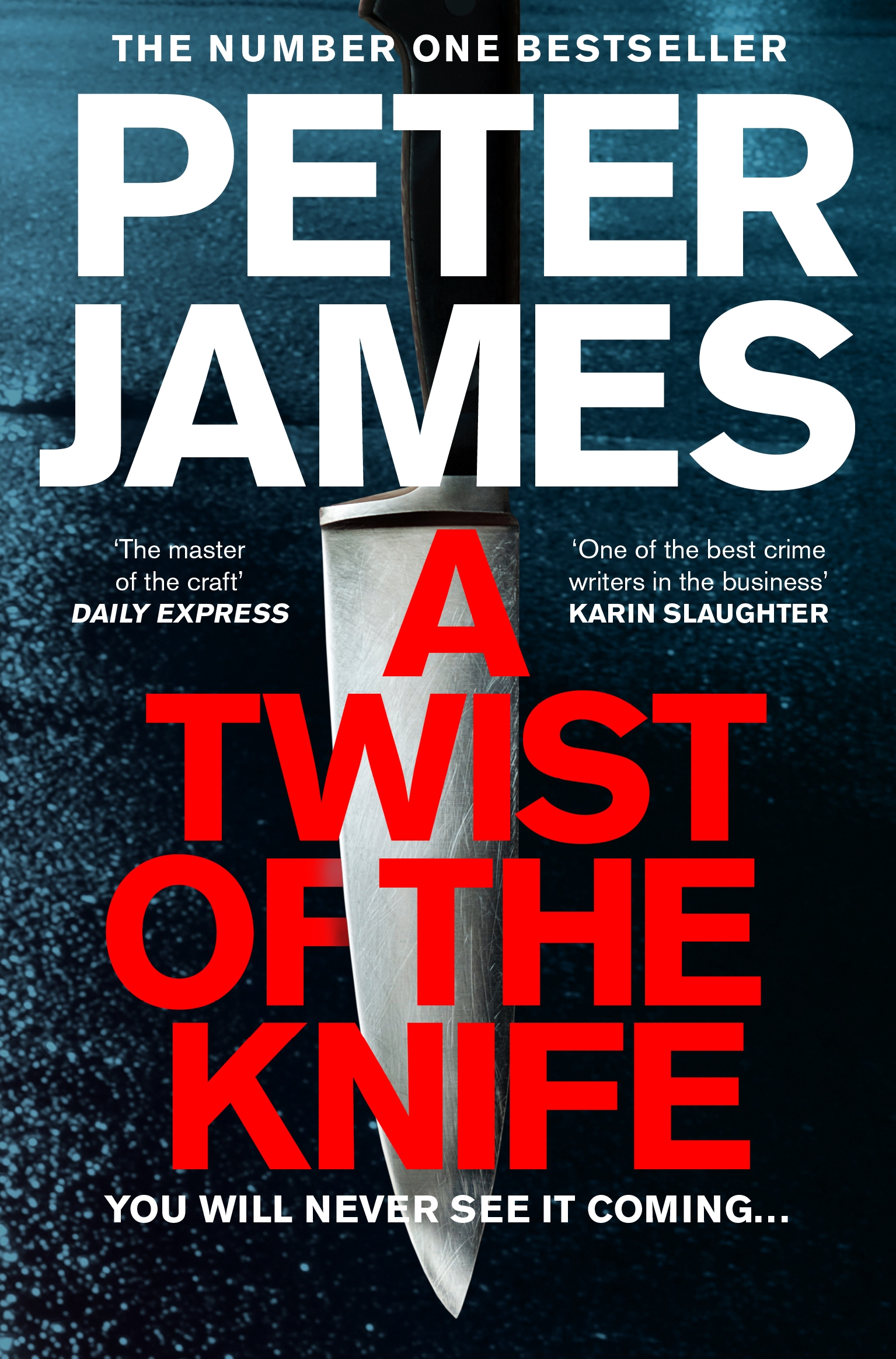
WBM: Alfred Hitchcock’s Mystery Magazine publishes short form crime fiction. In addition to your novels, you’ve written numerous short crime tales (many of which are collected in A Twist of the Knife). What do you like about the short form? What are the challenges of the short story for the career novelist? And how do you decide what ideas best fit a novel, novella or short story? PJ: I love short stories as I enjoy exploring themes that wouldn’t make a full-length novel—and also, I love to write really short, sharp shockers. But I do find them hard to write. The first draft of a Roy Grace novel, which will be around 120k words, takes me seven months. But it can take me two weeks to write a short story of just 1k words! In terms of deciding between a novella and a novel, it is very much a gut feeling for me. I’ve only written two novellas—The Perfect Murder and Wish You Were Dead—both for the Quick Reads Initiate, and both felt the perfect themes and length for me.
WBM: You do a lot of research with police forces throughout the world. I once read you were shot at in police car in Moscow. As someone who has lived in Moscow myself and writes crime fiction set in Eastern Europe, I’d love to know the details of that event. Did it inspire anything in your writing? What were your experiences like with the Moscow police force? PJ: I got friendly with the then Chief of Police of Central Moscow, Alexander Havkin, back in 2007, on book tour, he arranged for me to go out on patrol in a response car. It was about 8pm and I heard what sounded like a car backfiring. Next thing I knew, the driver did a very fast U-turn and drove like crazy. I think they were worried for my safety, otherwise I think they’d have stopped and had a shootout! Over a lot of booze with Alexander one night I asked him if the Russian Mafia was a figment of the West’s imagination. He replied that in 2000 the Moscow Police had lost control of the city to the Mafia and had only just got it back. I asked him how they could have lost control. “How much does a young police officer earn in London?’ was his reply. I told him around £27k. He told me in Moscow it was €3k. . . .
WBM: Detective Superintendent Roy Grace is an amazing character. What do you think it is about Roy that makes him so popular? PJ: Thank you! I’ve always joked that if I was unlucky enough to have a member of my family murdered, Roy Grace is the detective I would want running the case. I think people like him because he is smart, but at the same time, very warm and human. I’ve had a string of fan letters from ladies around the globe telling me that Roy Grace is the only fictional detective they’ve ever fancied sleeping with!
WBM: DS Grace has been adapted into the acclaimed GRACE television series available on ITV X in the UK and BritBox in the US and Canada and now filming its fourth season. How closely does the television series follow the novels? How personally involved were you in the production and what was it like translating Grace to a series? PJ: ITV have been a constant joy to work with, and they have tried very hard to remain as faithful as possible to the novels. There is only one book in the series where for a number of reasons, by mutual agreement, we wrote a largely original story. I’ve been involved at every stage, from scripts to cast, even down to the most minor cast member. And I could not be more thrilled with John Simm, nor with any of the other cast members, too.
WBM: Your nineteenth Roy Grace novel Stop Them Dead was released this September. What is happening to DS Grace now? PJ: I’m very excited about this novel. Roy, like myself—and my wife, Lara—is a dog lover, and he gets involved in the very dark world of the illegal puppy trade which exploded during lockdown, when the price of dogs went up tenfold. The Chief Constable of Sussex told me that Organised Crime Gangs were then and still are making more money out of illegally breeding, smuggling—as well as stealing—dogs than from drug—and with minuscule sentences if caught. And one of the very big, real dangers of this new trade is the risk of Rabies—a disease we have been free of in the UK for over 100 years. Countless dogs are being smuggled in daily from places like Romania, which have the highest incidence of Rabies in Europe—and with fake vaccination certificates. . . . And of course it features in my story! Although I do want to reassure all my readers that as a massive animal lover, I’ve not depicted any animals being harmed—only humans!
WBM: What makes Stop Them Dead unique in the series? PJ: Throughout the series, some of my themes and storylines have come from true situations, and when I’ve been asked by the police if I would consider highlighting issues. I did this for example with Dead Tomorrow, highlighting the horrific international trade in human organs for transplants. I wrote Love You Dead after Sussex Police told me that people in Sussex, looking for love on internet dating sights had, over the previous three years, been conned out of over £15m from people with fake profiles. I think in some ways, drawing from the reality of what is actually happening, adds something to the novels. I hope very much it will be the case with Stop Them Dead, where I’ve worked very closely with both the police and with the RSPCA (which I’m a patron of) who have been brilliantly helpful.
WBM: What are your writing plans for 2024? Any other projects creative or otherwise for the upcoming year? PJ: I have a very exciting year for 2024, with two novels coming out! The first, which will be in May, titled They Thought I was Dead—Sandy’s Story which tells the true story of Roy Grace’s missing wife, Sandy, from the day she disappears! I know a lot of my fans have been waiting for this for a very long time. . . . Then in September I have the 20th novel in the Roy Grace series coming out. The title will be announced soon! And we will have Season 4 of the Grace television series broadcasting early in the new year—with four new 2-hour episodes on Sunday nights on ITV1.
WBM: In closing, I know you were twice chairman of the Crime Writers’ Association and also involved at a senior level with International Thriller Writers. As a member of both associations we thank you for your service. How do you feel these and similar organizations like Mystery Writers of America should assist both new and established writers? How do you see these organizations evolving as we go deeper into the twenty-first century? PJ: Most writers need help when they are starting out. I was very lucky to have the late James Herbert, who initially gave me advice and then became one of my closest friends, before his untimely death. Organisations like the CWA, SOA, ITW, MWA and others around the world play an invaluable role in so many ways. Writing is a solitary occupation and it is wonderful to emerge from our caves and meet fellow writers at events organized by these, as well as some of the really brilliant and friendly festivals we have in the UK, such as Harrogate, Capital Crime, Crimefest, and the plethora of wonderful smaller ones. Nothing ever stands still in life and that applies so much to writers. In 1934 paperbacks began to be published, bringing books to the masses. Now we have audio books taking 10% of the market and electronic books closer to 50%—and I’m proud to say my novel Host, published by Penguin in 1993, is in the Science Museum as the World’s First Electronic Novel! Mind you, I was pilloried to hell and back and accused of trying to destroy the novel, back then! Writers need guidance on agents, on publishers and of course on the question so many ask is whether self-publishing is worthwhile. And perhaps the biggest question of all facing us right now, the new kid on the block, Chat GPT 4—friend or foe?
Author William Burton McCormick (Credit: Nika Popova)
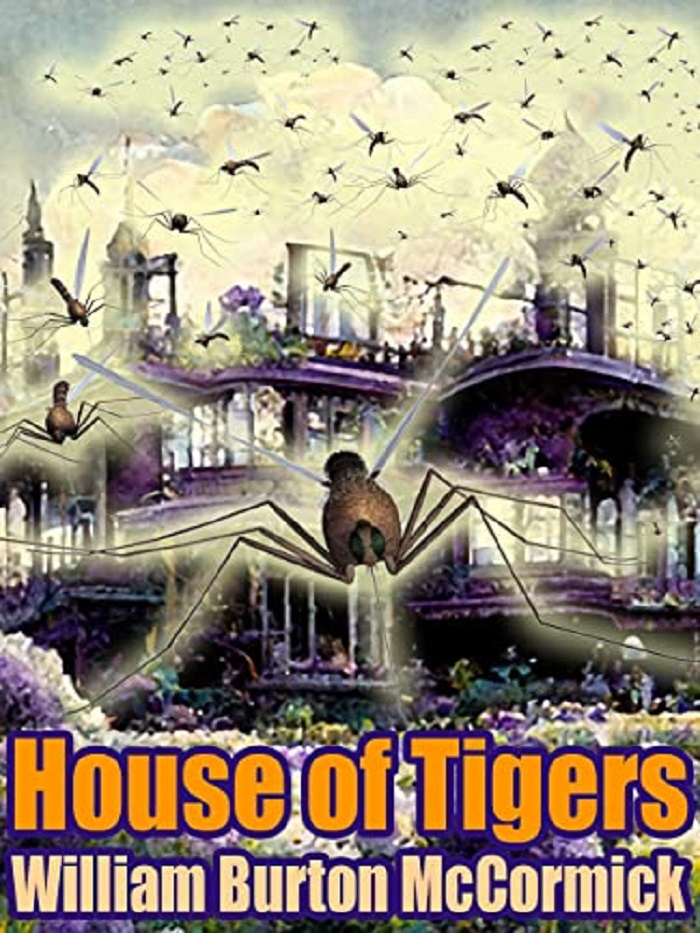
About the Interviewer: William Burton McCormick has no royal glovemakers in his family history, but his great-grand aunt was mistress to President Harding and conceived a child in the White House coat room. Other than that, William is an Edgar-award nominated writer of crime and thriller fiction set mainly in Eastern Europe. He is a regular contributor to Alfred Hitchcock’s Mystery Magazine and its sister publication Ellery Queen’s Mystery Magazine. He prefers the novella form and is the author of three acclaimed novellas A Stranger from the Storm, Demon in the Depths, and House of Tigers, as well as the award-winning novel KGB Banker (co-written with whistle-blower John Christmas). His forthcoming Western Ghost was written with the late U.S. Senate Majority Leader Harry Reid. A native of Nevada, William earned his MA in Novel Writing from the University of Manchester in the UK. He has lived in seven countries for writing purposes including Ukraine, Latvia, Estonia and Russia. Learn more about his writing at williamburtonmccormick.com or by following him on Twitter (he refuses to call it “X”) at @WBMCAuthor.
If you’ve ever watched a cooking show like Iron Chef or Chopped, there’s always one chef who uses every possible ingredient, every pot and pan in the kitchen, and who knocks one or more of them onto the floor while in a cooking frenzy. Often the original plan will be scrapped, and an entirely new recipe started when it seems impossible to finish on time. When the buzzer sounds, the chef presents a creative, tasty dish, served on a spotless plate, complete with edible origami-shaped garnishes. In the background, you can see the workstation. It looks like a tornado blew through, caused a train derailment, and fire is imminent.
The chef at the next station is a mise en place guy. The ingredients are not only within reach, quantities are premeasured according to the recipe, and the ramekins arranged in the order they will be used. When time is up, chef’s coat will be spotless and the workstation, immaculate.
Both dishes will be tasty enough to make you want seconds and thirds.
(Photos from Pexels.com)
Co-writing with Michael Bracken is much the same. I, of course, am the one without a plan of action. My mind wanders into twenty-seven possible scenarios and that’s before the halfway mark in the story. What if? guides every plot twist. A sidekick character will wander from my imagination onto the page. I try to evict them but besides being stubborn, they’ve often proven useful and stayed around to improve the storyline. After all, a main character needs a confidant, someone to make them laugh, or to just hold the flashlight while they dig.
Michael has a plan. In scene one, introduce the characters. In scene two, add conflict. When I wander too far off track or throw in a bit of trivia found during research, interesting but not vital to the story, he reins me in. On the other hand, we’ve had occasions where he tells me, here’s the crime. I don’t know who did it. I read it over and send back an email and say, it was this guy. And it works.
So far, we’ve co-written five stories and all have been published, most on their first submission. One uncooperative story is in limbo and two are in the “wait and see” stage. I write my ideas on scraps of yellow legal paper and tape them to the wall. Michael has files. Organized files.
We are the Odd Pairing of short stories, like tacos and toasted ravioli, but for us, it works.
Many years ago, when I had dreams of athletic glory, I used to box and I started learning the fistic science at Gleason’s Gym in N.Y. when they were located on West 30th Street in what was then the fur district. My trainer was Sammy Morgan, who harkened back to the days of Benny Leonard, Mike McTigue and Battling Siki. I learned a lot from him, and not just how to throw hands either. After I would finish working out, I would watch the other fighters train and listen to the stories from Sammy and the other trainers, and from them came the inspiration for “Doing Business.”
My crime and mystery fiction influences are several, but the top three are probably George V. Higgins, George Pelicanos and Colson Whitehead. Besides crime and mystery, I read a lot of history, particularly recent American urban history which gives me a lot of good ideas for stories. For example, all three of my three novels are based on actual events in my hometown of Buffalo. On TV, lately, I’ve been watching Endeavor, the latest Sylvester Stallone series Tulsa King and the Jesse Stone movies.
I’m a retired firefighter, and after that I worked as a deckhand on tugboats and taught firefighting to mariners. Now I just write, although I still keep my hand in the maritime trade by volunteering on the World War II Liberty Ship, the S.S. John W. Brown here in Baltimore. I get up early to feed our dog Nestle, work out to clear the cobwebs out of my cranium and start writing around 10:00 A.M. The kids are working or at school these days, so I can usually keep hammering the keyboard until around 5:00 P.M. I spend a lot of time doing research and find interviewing eyewitnesses and visiting the sites where stories occur to be the best inspirations for plot and character ideas.
I’m currently working on a fourth novel, assisting a master mariner friend with his memoir and have about half a dozen short stories I just can’t seem to finish. Yet.
As for recent literary developments, I discovered the existence of a position called “sensitivity editor” at a writer’s convention last year, and I think the concept is absolute nonsense. Characters in short stories, novels, etc. should reflect the accurate speech of real people from any era and I hope the literary community does away with this fraud immediately if not sooner.















 Trace Evidence