Category Archives: How’d That Happen

Ken Wishnia: Putting on The Editor’s Hat

Or, damn, you people are making me work!

I’m supposed to be a writer, not an editor. I’ve published six novels and a bunch of short stories in various anthologies, but Jewish Noir (PM Press) is the first time I’ve ever proposed, assembled and edited an anthology by myself. I had been warned, by none other than Reed Farrel Coleman, that editing an anthology is a lot of work, but I had no idea that it would be quite so much work. Also, the publisher’s contract should have come with a label saying, Warning: You Will Lose Friends—if you do the job right.
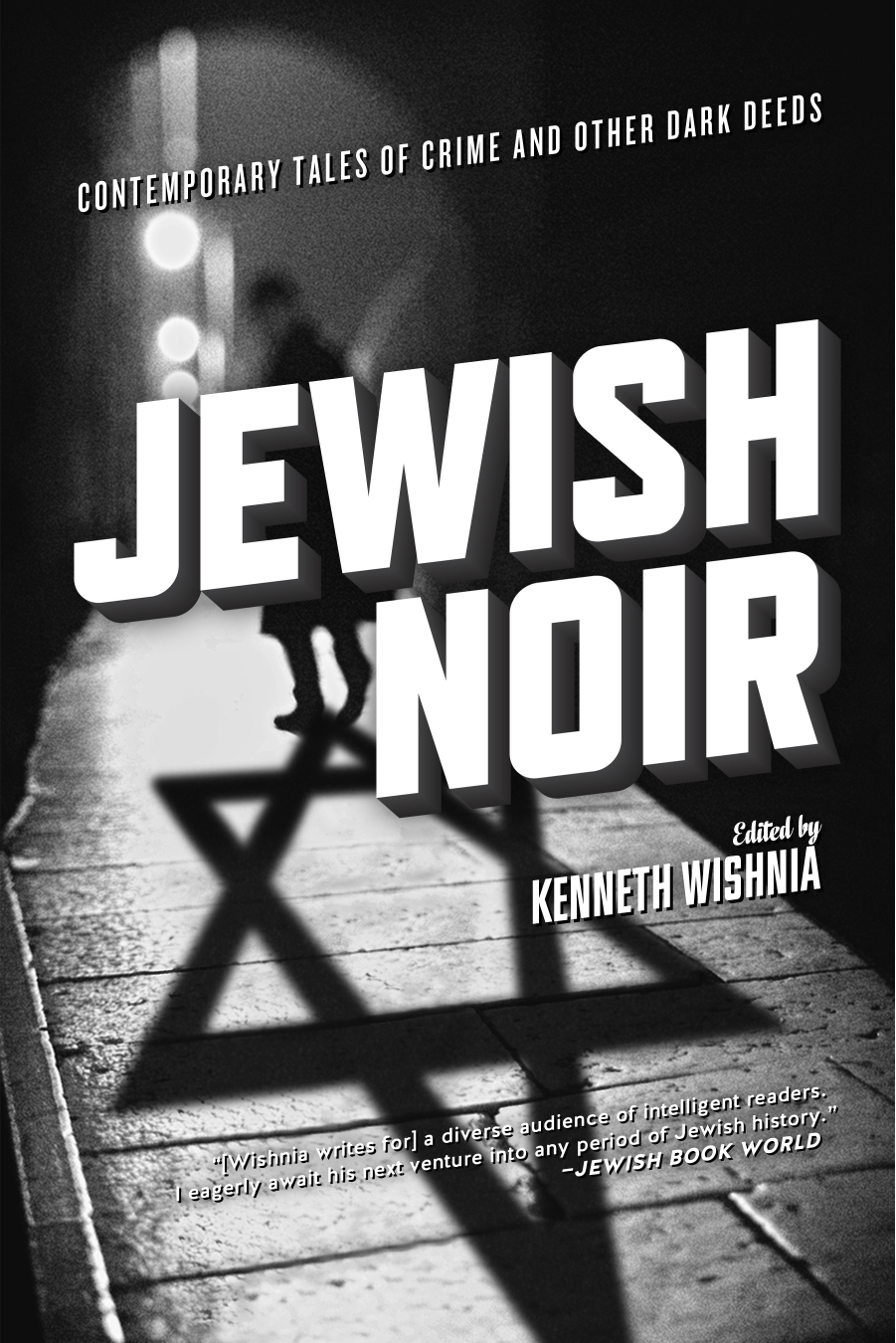
Jewish noir jpegBut first, the fun stuff. It was a real treat to be able to work closely with such luminaries as Marge Piercy, Harlan Ellison, S.J. Rozan, David Liss, Wendy Hornsby, Jason Starr and Eddie Muller, among others. I had to do a lot of back-and-forth emailing with the contributors, including some face-to-face discussions and sitdowns with authors to go through their manuscripts page by page.

And thanks to our generous “You don’t have to be Jewish to write Jewish Noir” policy, I also got to collaborate with writers like Canadian author Melissa Yi, who was a joy to work with. She sent me two stories for consideration, and I ended up replying with a carefully worded email explaining that I liked the first half of the first story and the second half of the second story, and asked if she would be willing to combine the two stories along these lines to create a totally new story. That’s asking a lot, but not only was she willing to do it, after revising the two stories into one, she ended up adding a new section that gave her story “Blood Diamonds” a crack-of-the-whip sting of an ending that will linger in your mind for long after you’ve read it.

All this from a definite non-Jew, you should know.

But I have to say that some of the non-Jewish authors’ attempts at capturing Jewish culture made me laugh out loud. One author had a family dinner featuring matzoh ball soup, latkes and potato kugel. This may not seem like much to some readers, but I don’t know any Jewish cooks who would ever make all three of these dishes at the same time, especially the last two, which are both labor intensive high-calorie potato-based dishes that are variously fried in oil and served with sour cream, or baked and sizzled in rendered chicken fat (using traditional recipes, anyway). I told the author that’s like having a “typical” Irish dinner of corned beef and cabbage and an Irish stew and a shepherd’s pie and a steak and Guinness pie and boiled potatoes and some Irish soda bread. A bit much, I would say.

Then came the brisket. Vey iz mir. At one point, it seemed like every other story had someone getting ready to chow down on some brisket, which my family only has once a year on Passover, for God’s sake. I emailed the authors, asking, “Are you guys just Googling ‘Jewish food’ and picking the first thing that comes up? You never heard of chopped liver? Or some nice flanken for a change? Maybe a piece of herring?”

They pleaded guilty.

But the Jews know from guilt, too. Even some of the Jewish authors messed up the Yiddish words and phrases in their stories. Part of my job was to establish a style to standardize the transliteration of common Yiddish expressions. What fun.

For the uninitiated, Yiddish was the primary language of the majority of Central and Eastern European Jews for many centuries (German Jews typically spoke German). Descended from Middle High German, with a vocabulary that is roughly 30-40% Slavic and Hebrew, depending on whom you ask, it is written using the Hebrew alphabet. So if it looks like Hebrew and sounds like German, it’s Yiddish.

The problem is that very few contemporary American Jews have had significant contact with genuine literary or conversational Yiddish. Many of them merely remember a few phrases and expressions that bubbe (that’s grandma to you) used to say. But since they’re remembering from way back, they often get it wrong. Think of the classic Mike Meyers Saturday Night Live sketch, “Cawfee Tawk,” whose host was always saying, “I’m getting vaklempt,” meaning emotionally choked up.

The correct Yiddish is farklempt.

The tricky part about getting it right is that if your character is a third or fourth generation descendant of Yiddish-speaking immigrants, then it would be acceptable, even “correct,” to have that character make a mistake in his or her Yiddish. For example, in Eddie Muller’s story, “Doc’s Oscar,” the narrator complains about his “khazerai  wheelchair.” This is ungrammatical. Khazerai is a noun, meaning “filth, mess, piggishness,” and is not used in Yiddish as an adjective. But after checking with an expert native speaker (my father Arnold Wishnia), who confirmed that Eddie’s character, a boorish Hollywood type of a certain generation, would have said it that way, we decided to leave it in with an explanatory footnote to that effect in the introduction.

We’ve already received an email commenting that “khazerai wheelchair” is wrong and ungrammatical and that we’d better fix it or else. I directed the commenter to the explanatory note. Hope that works.

But the hardest part of being an editor is when you have to reject a story, or deal with authors who—ahem—won’t change a word of their not-quite-flawless stories. This was a situation in which it might have been better to be a paid editor working for the house. Then you can hide behind the generic “this isn’t right for us” response, or the fact that your job is on the line if you accept sub-standard work.

Then there were the people who wanted to be part of the anthology but found out about it too late to be considered. (The slots filled up in about a minute and the anthology ballooned to nearly twice its proposed size, to 32 contributors, and has gone way over budget.) I have already apologized to several authors who were not invited and have promised them an invitation to submit to Jewish Noir 2, should that ever come to pass. (Note: My agent will kill me if I distract myself from my current novel-in-progress with something as insane as doing Jewish Noir 2 at this point.)

Doug Levin! Why didn’t I think of inviting him? Oops.

And Alfred Hitchcock and Ellery Queen favorite, Doug Allyn, who turns out to be Jewish. Who knew?

Even Eddie “The Czar of Noir” Muller said that he recently learned of some Jewish ancestry in his lineage, which raises some serious issues regarding the suppression of Jewish ethnicity during less enlightened times. I mean, how many Americans “discover” that they have Christian ancestors? But that’s a whole other subject for a separate blog.

Now go check out Jewish Noir. Or I’ll sic the global Jewish conspiracy to control world finances and media on you.
5 Comments

Filed under How'd That Happen

David Edgerley Gates: Perspectives

David Edgerley Gates is one of those writers who “paints” with words, producing vivid and complex portraits of both the inner lives of his characters and the worlds they inhabit. Whether he’s writing about the internecine struggles of mid-century New York Mob families, or the turn-of-the-century American West of the lonely bounty hunter Placido Geist, or—as in our July/August cover story, “In for a Penny”—police procedures of modern-day New Mexico, David creates fictional worlds both detailed and complete. In this post, he discusses the “canvasses” of such word paintings: the sense of place.

Linda Landrigan asked me post some comments here, and she suggested I might say something about the sense of place in my stories, which got me thinking about landscape as character. Not backdrop, but an active presence, as much a part of the story as events.

Physical landscape is important to stories, and Westerns in particular, because so often the interior landscape is uninhabitated. The strengths or weaknesses of the characters aren’t explained, or revealed, but reflected–a mirror, set an angle to catch the light. This is another way of saying the characters are ‘existential,’ meaning they define themselves in their immediate circumstance, and more than likely a hostile environment. This is true of noir, especially, which depends on the pairing of two unknowables: the implacability of Fate, and a fatal lack of self-awareness. In this sense, the landscape provides no camouflage. You become a silhouette. The darkness doesn’t hide you, because everything’s in shadow.

Is character Destiny? Yes, in the staged confines of a fiction. But you can still bump into the furniture. The geography of place, in a story, can be frightening, or familiar, or both at once. It’s never arbitrary. It has a purpose, and more than just setting, or the view through the windows. It informs. It establishes context. And it breathes. Landscape isn’t static. It has a specific gravity, and it can shift its weight. As a function of story, the shape of the landscape is more than a narrative device. It bridges the gap between the observed and the imagined. Not that it has to be actual—Middle-Earth or Westeros will do just as well—but it needs to be grounded in a felt reality. You have to be able to smell the rain, or the heat of day, winter in the air, damp smoke from a campfire when the wind changes. You can make a lot of this stuff up. You don’t want to make up how the weather was.

I suspect Linda was asking me about specific terrain, the Bootheel of New Mexico, New York in the late 1940’s, Berlin during the Cold War. Each of these places has its own specific gravity, an orientation toward the horizon line, a roadmap. It’s peopled with incident, much of it imagined, but imaginary or not, the landscape itself is as convincing as I can make it.

Leave a comment

Filed under How'd That Happen

Robert S. Levinson: Clark Gable, Mama, and the Velour Stetson

Robert S. Levinson, who wrote “Little Miss Somebody” in our July/August issue, has been entertaining AHMM readers since 2003. Drawing on his years working in the entertainment industry, Bob infuses his stories and novels with the creative energy of Hollywood, and its destructive currents. His latest novel, The Evil Deeds We Do, is a thriller centered around the music industry in L.A. Here he writes about the source of his fascination with Hollywood.

Hello, my name is Bob.

I’m a show business junkie.

Most of the stories I’ve had the good fortune to see published in AHMM and elsewhere have somehow dealt with some form or other of show business, set frequently, albeit not exclusively, in the “Golden Age of Movies,” an era when MGM boasted that its talent menu offered “More Stars Than There Are in the Heavens” and justified the claim with Garbo, Gable, Tracy, Harlow, Shearer, Powell, Loy, Crawford, Beery, Dressler, Turner, Taylor, Lamarr, Rooney, Garland, the Marx Brothers, and even a couple Barrymores.

I begin this memory voyage back in time with MGM, not studios like Warner Bros., Paramount, Universal, Fox, RKO, or Columbia, because it was MGM where and when I believe my love affair took root, all thanks due my mother.

She was barely out of her teens then, a devoted Gable fan, who decided one day she had to meet the King, her screen idol. First, though, there was a little obstacle to overcome. The family was in the Brownsville section of Brooklyn. Gable was three thousand miles away in Culver City.

Mama’s solution: We had to move west. My father, a hat maker, had no objection. Gable? Gable was competition for his wife’s affection only in her wildest imagination. Besides, Dad was anxious to escape to a new life with the family far from the Brownsville friends he’d grown up with, many of whom had graduated to Murder, Inc.

En route to Los Angeles, Dad found work making hats in Dallas, where he hand-formed a one-of-a-kind velour Stetson for Gable, who (long-arm of coincidence) he’d read somewhere loved and collected hats. Once settled in L.A., with three-year-old Bobby in one hand, an oversized hat box in the other, Mama set off by bus and trolley for Culver City, where the scene at the entrance to the MGM lot went something like this:

Mama: I’m here to see Clark Gable.

Security guard: Is he expecting you?

Mama: (Displays the hat box) No, but I have a hat for him. It’s a surprise gift.

Security guard: Sorry, missy. If you’re not expected by Mr. Gable, I can’t allow you in.

Man (Approaching): Aren’t you pretty. You got pretty violet eyes, you know? Is he your little brother?

Mama: He’s my son. My Bobby.

Man: Son? You don’t look old enough to be married. You sure you’re married?

The guard (Laughs): Pretty funny, Chico.

Chico! Now Mama recognizes him as one of the Marx Brothers. Her eyes grow misty telling him about Gable and the hat. He nods understanding, uses the security guard’s phone to make a call that results in a studio pass for us; is briefly our tour guide before halting a tram full of costumed extras heading for distant locations in the vastness of the MGM back lot, and instructs the driver to drop us off close as possible to Gable’s set. As the tram starts down the street, he returns my wave and blows Mama a kiss.

A cowboy directed Mama to an oversized trailer outside a soundstage. Gable, dressed in cowboy garb, was relaxing in a director’s chair, laughing it up with a pair of stagehands. Mama gasped at the sight of him, took a deep breath, and waited with as much patience as she could muster until the stagehands left and Gable resumed studying his script. Commanding me to stay by her side, she marched the most direct line to Gable and stood staring, silent, hesitant to interrupt him. Finally, he looked up. He saw Mama first, but the smile was for both of us.

“I got something for you,” Mama said at last.

“I don’t suppose it’s the little fellow here.” He leaned forward, picked me up, and sat me on his knees.

Mama offered Gable the hat box and launched an explanation.

Gable carefully removed the velour Stetson and held it delicately in his large hands. He studied its contours and smoothed the Stetson knowingly with the backs of his fingers. He tried it on and expressed delight at the perfect fit.

“I have to have a look,” he said. He took me into his arms, stood, and urged Mama to follow us up the stairs into his dressing room trailer.

He didn’t have to ask Mama twice.

In front of the vanity mirror, he tried the hat at various angles, studying the effect of each position, commenting as the tilt went forward and back, the angle left and right. Finally, he passed judgment. “It’s going to be one of my favorites,” Gable said.

They talked while I wandered the trailer. When it was time for him to head back to work, he first found two photographs to autograph. After signing one to Mama, he wondered about inscribing the other to my dad.

“That’s all right,” Mama said. “You can do it again for me.” Gable gave her a curious look. “It’s in case I lose one.”

He broke out what I came to call the Gable grin. “Then please thank your husband, and give him this from me,” he said. He gave Mama a hug and a handshake. “And this, Helen, is for you,” Gable said. He pushed back the Stetson, took Mama in his arms and kissed her gently on the lips.

That began my infatuation with the movies and, when I was a pre-teen, chasing after autographs.

I was much older, a newspaper guy with the Riverside Press-Enterprise who covered the major studio sneak previews that occurred regularly in town, the year Gable showed up for his Paramount picture, But Not for Me, and got a standing ovation when he entered the theater.

He and his wife Kay settled in the row directly behind my wife, Sandra, and me. I couldn’t bring myself to turn and ask him if he remembered Mama and the velour Stetson. Too many years had passed.

Maybe I should have.

What do you think?

4 Comments

Filed under How'd That Happen

Bob Tippee: Unhinging the Workplace Setting

Bob Tippee is an award-winning business journalist who writes about the oil and gas industry. His stories for AHMM are often set in fiercely competitive workplace cultures; our June cover story, “The PLT,” is an excellent example.

Fiction, of course, must transport the reader beyond immediate reality into a world of the writer’s imagination. Hugely important to that world is setting, a bundle of qualities unique to any story that might be said to fit along a spectrum defined by other-worldly fantasy at one extreme and here-and-now familiarity at the other. Settings between those poles must be somehow exotic: places where a reader might wish or be loath to go but cannot, possibly in combination with times inaccessible as well. Continue reading

Leave a comment

Filed under How'd That Happen

The Two Mississippi Rivers by Joe Helgerson

Joe Helgerson is the author the very entertaining series of stories featuring Sheriff Huck Finn set in turn-of-the-century Marquis, Iowa—continued in our May issue with “The Case of Captain Nemo’s Half Brother.” He has also written two clever YA books, Horns & Wrinkles (2006) and Crows & Cards (2009), both published by Houghton Mifflin Books for Children. The latter was named a Smithsonian Notable Book. The Sheriff Huck stories, which he talks about here, go back to June 2002, but he published two stories with us in 1983, beginning with “Eighty-Seven Miles of Smoke and Mist” (April 1983).

I’ve always had a soft spot for crackpot theories, especially when they’re my own. One of my favorites contends that there’s not one but two Mississippi Rivers that drain North America. One’s measured in miles, the other in pages. One carries away our topsoil, the other our imagination. The first starts in Lake Itasca, the second in Samuel Clemens’s inkpot.  Having grown up in a small town on the Mississippi myself, it was probably inevitable that these two rivers would eventually mingle in my writing.

I wish I could say that my love of Mark Twain’s work dates back to my childhood, but that would a lie, and we all know how fiction writers hate those. So I’ll give it to you straight: I’ve only a faint memory of my parents reading Tom Sawyer Continue reading

Leave a comment

Filed under How'd That Happen

How’d That Happen: Janice Law talks about Nip and Madame Selina

One of the more interesting detecting teams on the scene right now is Janice Law’s medium Madame Selina, her young assistant Nip, and her spirit guide Marcus Aurelius. In addition to being a short story writer and award-winning novelist—The Prisoner of the Riviera, featuring British painter Francis Bacon, won a Lambda Award for best gay mystery of 2013—Janice Law is also a painter. You can view samples of her work at her Web site JaniceLaw.com.

I had only done one series character before Madame Selina and her assistant. That was Anna Peters, who fought crime of one sort or another through nine novels. When I came up with an idea for a story about a nineteenth century medium in New York City, I assumed that the short story would be the beginning and end of her career. However, one of my Sleuthsayer colleagues, Rob Lopresti, not only liked the story but uttered the fateful words, “this would make a good series.” Who knows what triggers the subconscious? Pretty soon Nip Tompkins had more to tell me. As a result, there have now been eight stories and counting. Why these two characters and why New York just after the Civil War? Blame a long career in academe, teaching, among other things, 19th century American lit, which inevitably involved the history of the period. Madame Selina’s dual role of medium and detective has involved the big issues of the period: the carnage of the Civil War and its consequences, the coming of the Irish, the dangerous lives of African-Americans, Spiritualism and its debunkers, along with those favorite 19th century plot lines, endangered heiresses and fiscal chicanery. As for the characters, Madame Selina came from an interest in the medicine and psychology of the period, odd mixes of science and superstition. Nip was another matter. Occasionally a character is just a gift, a quiet voice in the ear. An orphan sprung from the ghastly Orphan Home to assist in the illusions of the seances, Nip has a good heart, a sense of humor, and considerable ingenuity. I’ve found him a nice foil for the tricky yet sincere Madame Selina and an amusing narrator. Does Nip believe in Marcus Aurelius, her guide in the spirit world? He started out credulous—he was after all only eight years old. Then he grew skeptical, especially since keeping Aurelius up to date on railroad stocks and Tammany Hall required a good deal of leg work from him. But lately, he’s developed a more nuanced attitude. Although he has his doubts, he’s convinced that Madame Selina’s faith is genuine and he’s nervous until the late Emperor of the Romans answers her call.

Leave a comment

Filed under How'd That Happen

How’d That Happen: John C. Boland

John C. Boland is, in addition to being a first-rate storyteller, a journalist by trade and, more recently, publisher of Perfect Crime Books. His first story for AHMM appeared in 1976, and since then his stories and novels have been shortlisted for Edgar, Shamus, and many other literary awards. In this post he shares some insights into his marvelous series featuring CIA officer Charles Marley.

I envy writers who sit down in the morning, launch into a story with some idea of where it’s headed, and by lunchtime have 3,500 publishable words. When I say I envy them, that also implies I resent their efficiency. I’ve done it in their admirable way now and then. But most of the time my method is closer to making sausage in a dimly lit garage.

My story in the April Hitchcock’s, “Marley’s Lover,” is a case in point: bits from a failed literary story have been chopped free and stuffed into a mystery casing. I like both stories, as it happens, though both have weaknesses. In “Marley’s Lover,” I got to ridicule the connect-the-dots fallacy that produces “history,” I got to complain (as usual) about the damage inflicted on all of us by time, I got to brush alongside the question of why a number of American Communists became life-long traitors and, finally, I got to duck it by borrowing the words of the British spy Kim Philby on the matter of “staying the course.” There is an implication at the very end that my retired CIA case officer, Charles Marley, has been more of a fool than usual. Continue reading

Leave a comment

Filed under How'd That Happen

Happily Ever After: B. K. Stevens

In this post, B. K. Stevens offers insights and reflections on the bittersweet prospect of wrapping up a long-running series. Stevens has long been adept at juggling multiple series, and several of her recurring characters have appeared in AHMM, including P.I. Iphigenia Woodhouse and academic amateur sleuth Leah Abrams. Those tales, like the Walt Johnson/Gordon Bolt stories she discusses here, are notable for their humor and fraught relationships among characters. Stevens introduced a new series in our pages with “Interpretation of Murder” (December 2010), which featured American Sign Language Interpreter Jane Ciardi. The story won a Derringer Award, and Stevens has now written the first Ciardi novel, also titled Interpretation of Murder, forthcoming from Black Opal Books winter 2015. Meanwhile, her martial-arts YA novel Fighting Chance is also due out winter 2015 from Poisoned Pencil, an imprint of Poisoned Pen Press. Look for her next story, “A Joy Forever,” in our March 2015 issue.

Happy endings are hard. At least, they’re hard to write well.

Not everyone would agree. Years ago, a well-regarded author addressed a writers’ group to which I belonged. At one point, he said he’d never write a novel or story with a happy ending, and a member of the group asked him why.

Continue reading

38 Comments

Filed under How'd That Happen

Hearing Voices: Joseph Goodrich

Being a playwright and actor in addition to a mystery writer, Joseph Goodrich has a nuanced view of voice, which he discusses here. He won an Edgar Award in 2008 for his play “Panic,” inspired by the life and work of Alfred Hitchcock. His plays include “Calamity Town,” based on the 1942 Ellery Queen novel of the same name, and most recently “The Red Box,”  based on a 1937 Nero Wolfe novel, which debuted this summer in Minneapolis to great acclaim. He edited Blood Relations: The Selected Letters of Ellery Queen, 1947–1950.

As a playwright and a writer of fiction, I spend a lot of time alone in a room talking to myself. It’s only natural that the question of voice fascinates me.

When I talk about voice, I’m talking about two things, really: the voice of an author, and the voices of an author’s characters.

The first is a subtle combination of subject matter, language, experience, and perspective—the sum of all the choices a writer makes in the creation of a work. Those choices are as singular as fingerprints, and also serve as identification. It’s why Hammett doesn’t sound like Christie, and why Christie doesn’t sound like Highsmith. Another word for this is style, which Raymond Chandler once defined as “the projection of personality.”

A character’s voice is a lot like an author’s: It reflects the age, background, likes and dislikes of that character, and serves to distinguish one character from another. For me—and this is a result of years of working in the theater—the key to a character’s voice is sound. Marty Kaplan, the narrator of my short story “Red Alert” (AHMM, November 2014), is an East Coast wisecracker of a certain age who was once in show business. His sound is snappy, irreverent—and what he says is (I hope) entertaining.

When I’m moving words around at my desk, or contemplating notes scrawled in a Moleskine, or walking down the street with a head full of jangling story fragments, one of the things I’m doing is listening for the sound of the piece in question. Sound isn’t separate from sense, of course. The two are related. But “Call me Ishmael” creates a different effect than “Hey, it’s Ishmael. How are ya?”

Continue reading

Leave a comment

Filed under How'd That Happen

Kevin Egan: Writing What I know—Not Always So Easy

Kevin Egan’s newest novel, Midnight (Forge)—named a Best Book of 2013 by Kirkus Reviews—takes place in and around the New York County Courthouse. His story in our June issue, “Term Life,” draws its characters from the same milieu. Here, the author explains his fascination with the what goes on behind the bench.

“Write what you know.” It is a standard writing instructor mantra.

As a college senior I took two creative writing classes. The first professor insisted we write what we know. I didn’t know anything about anything. The second professor encouraged us to write about anything in the world. I chose a slave in ancient Rome. But years later, and after much hard work, I was able to steer a course between writing what I knew and writing about anything in the world. I published one science fiction novel and three cozy mysteries. Then I decided to write about something I knew well – my job.

I am a lawyer and have worked my entire career in the New York state court system, mostly as a judge’s law clerk. I also work at the New York County Courthouse, famous from the opening credits of Law & Order as well as other television and movie productions. It seemed like a natural combination: Add my insider’s view on interesting cases to a landmark setting and, voila, dramatic fiction would follow.

But dramatic fiction did not follow.

Continue reading

2 Comments

Filed under How'd That Happen